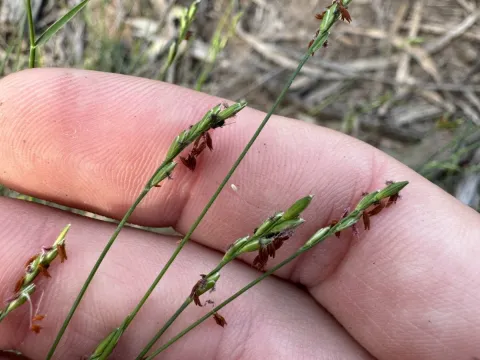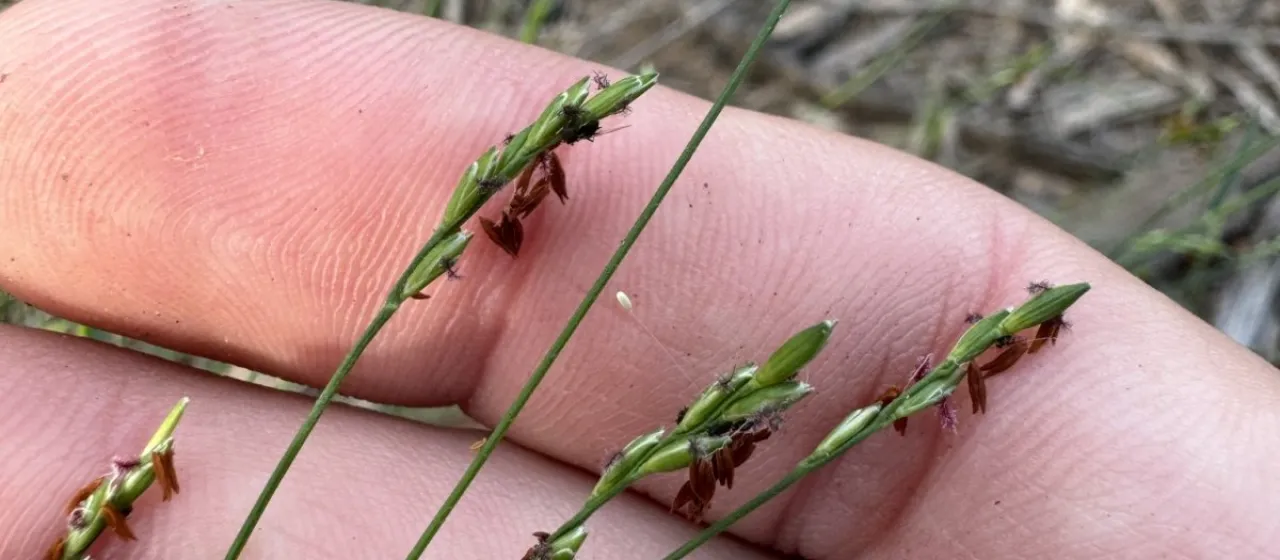
Description
Ottochloa fusca is a perennial grass species belonging to the Poaceae family. Recognized for its agricultural potential, this plant serves as a vital forage resource in tropical and subtropical regions, contributing to the nutritional sustainability of livestock systems.
The native range of Ottochloa fusca encompasses parts of Southeast Asia, the Pacific Islands, and Australia. The species is well-adapted to warm, humid climates, frequently colonizing riparian zones, moist meadows, and shaded forest margins, which highlights its inherent tolerance to high moisture levels.
Botanically, it is characterized by a creeping growth habit, allowing the stems to root at nodes and form dense, erosion-resistant ground cover. The leaves are typically lanceolate and soft, which enhances the palatability and nutritional value for grazing livestock, distinguishing it from coarser grasses.
From an agronomical perspective, this grass requires consistent moisture and fertile, well-draining soils to reach its maximum yield potential. While it exhibits notable shade tolerance, it thrives best under partial to full sunlight. Effective management involves rotational grazing practices and nitrogen supplementation to maintain consistent forage production throughout the growing season.
The primary use of Ottochloa fusca is for grazing and supplemental fodder production. While generally robust, the crop can be susceptible to fungal leaf pathogens under conditions of poor drainage or stagnant air. Typical pests include those commonly found in tropical grasses, which are usually managed through integrated pest control strategies and maintaining healthy, vigorous pasture stands.
Photo gallery