Description
Oak-leaved goosefoot (lat. Oxybasis glauca) is an annual herbaceous plant belonging to the Amaranthaceae family. While primarily categorized as a weed in commercial farming, it serves as an important subject for botanical study due to its extreme salt tolerance and ability to thrive in diverse ecological niches.
The distribution of the species is extensive, spanning temperate and subtropical regions across Europe, Asia, and North America. It is typically found in habitats ranging from saline marshes and riverbanks to disturbed agricultural lands, where it frequently invades row crops and vegetable fields.
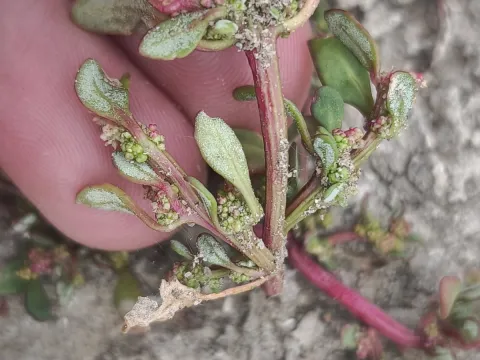
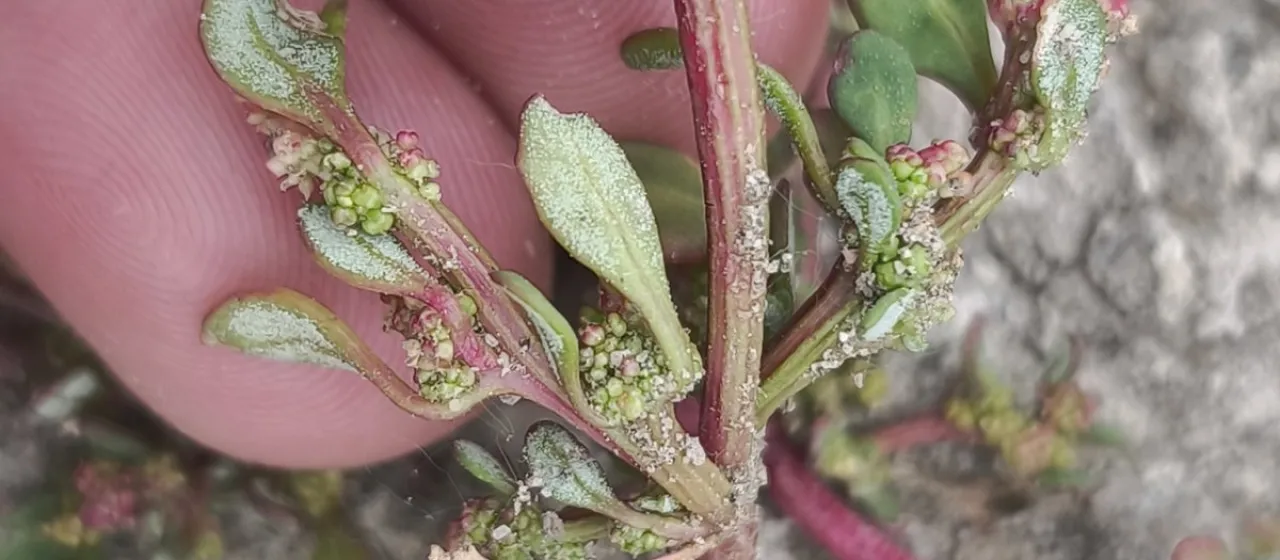
Botanically, the plant is characterized by its prostrate to ascending stems and leaves that are often glaucous (covered in a mealy, whitish substance) on the underside. Its flowers are inconspicuous and clustered, designed for self-pollination or wind-assisted fertilization, which contributes to the species' reproductive success.
Agrotechnical management of Oxybasis glauca involves integrated weed control strategies. Because the plant thrives in saline and nutrient-rich environments, it often outcompetes crops in fertile, irrigated soils. Control methods focus on deep tillage, crop rotation, and the application of selective herbicides during the early stages of weed germination.
Agricultural risks associated with this plant include increased competition for moisture and soil nutrients, as well as the potential for the plant to act as a secondary host for common pests like aphids. Despite its nuisance status in fields, the species is an object of interest for researchers studying halophytic (salt-tolerant) plants and potential genetic resources for crop resilience.
Photo gallery