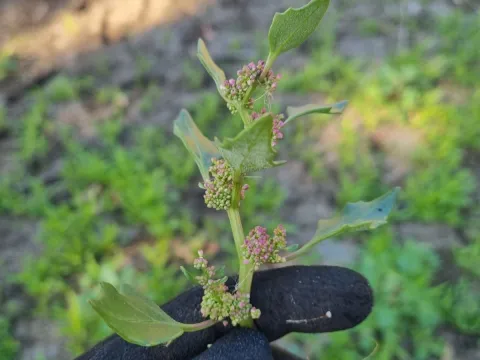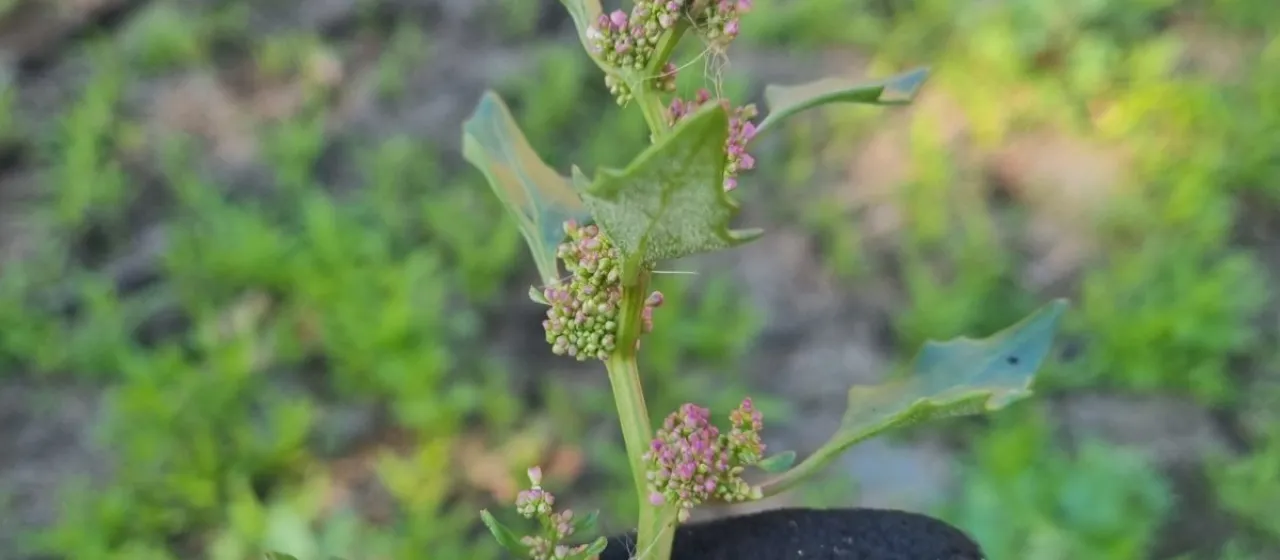
Description
Large-seeded oxybasis (Oxybasis macrosperma) is an annual herbaceous plant belonging to the Amaranthaceae family. Formerly categorized within the genus Chenopodium, it is now recognized as a distinct genus based on its specific floral and seed morphology, which distinguishes it from other common goosefoot species in temperate and arid regions.
The plant originates from the arid and semi-arid zones of Central and South Asia. Its historical distribution is closely linked to saline habitats and anthropogenically disturbed soils. In modern agricultural practice, it is recognized as a niche crop with high potential for utilization in degraded lands where soil salinity levels exceed the threshold for standard grain or vegetable cultivation.
Botanically, Oxybasis macrosperma is characterized by its alternate leaves, which are typically rhombic or hastate in shape. The plant produces relatively large, nutrient-rich seeds, which gave rise to its scientific species epithet. Its root system is deep and penetrating, allowing the plant to access moisture in sub-surface soil layers, which contributes significantly to its drought tolerance.
Climate and soil requirements for this species are specific: it thrives in well-lit environments and shows a remarkable tolerance to mineral-rich or saline soils. Cultivation requires precise agricultural management, including early-stage weed control to prevent competitive pressure and optimal sowing density to encourage uniform crop maturation. It is generally well-adapted to high-temperature summer conditions.
The agricultural use of this plant is focused on its nutritional potential. The green biomass provides a sustainable feed source for livestock, while the seeds, which are rich in proteins and essential fatty acids, are studied for potential use in the human food chain as a nutritious grain. Typical pests include aphids and mites, while pathogens such as downy mildew may occur in areas with poor drainage and excessive atmospheric humidity.
Photo gallery