Description
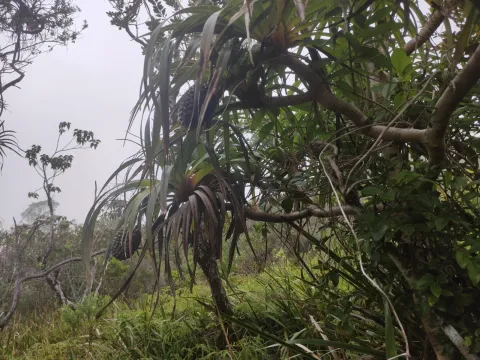
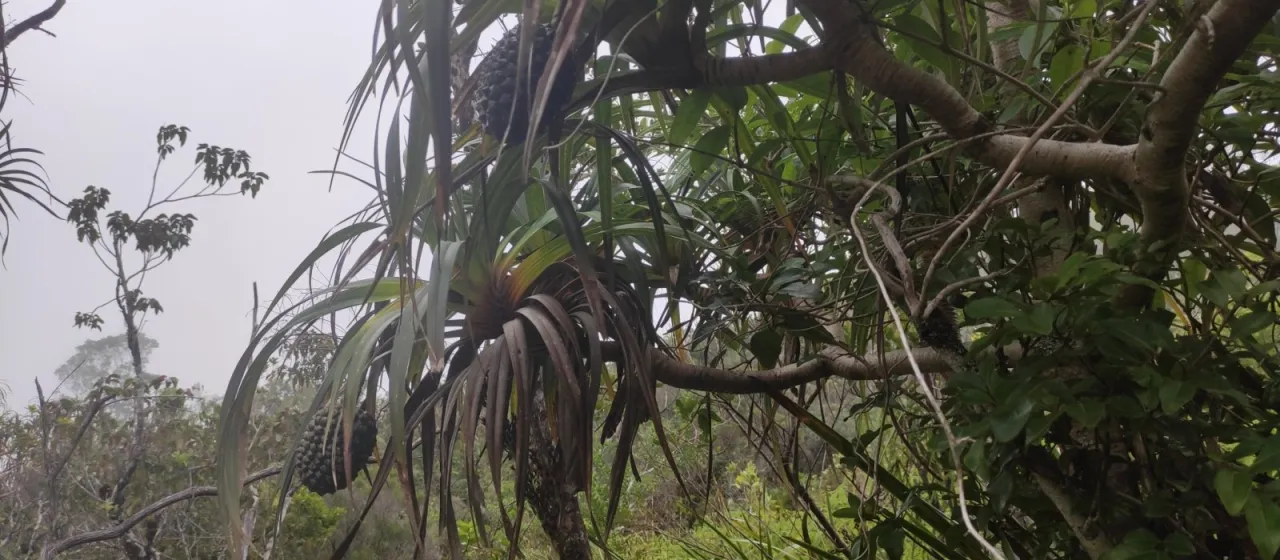
Mountain pandanus (Pandanus montanus) is a distinctive perennial tree-like plant belonging to the Pandanaceae family. Unlike many other members of the genus that dominate coastal areas, this specific species has evolved to thrive in mountainous environments, exhibiting specific structural adaptations that allow it to anchor securely in challenging terrain.
The native distribution of this species is primarily concentrated in the mountainous forest regions of Sri Lanka. It thrives in high-altitude tropical forests where the microclimate is characterized by high humidity levels and cooler temperatures compared to coastal plains. These conditions are critical for its vegetative development and reproductive cycle.
Botanically, the plant is recognized by its spiral arrangement of long, serrated leaves and a robust trunk reinforced by stilt roots. These roots provide critical stability on sloped surfaces, allowing the plant to reach heights that maximize light exposure in the dense forest canopy. The inflorescences produce large, composite fruits that resemble pineapples, which are typical for the family.
Agricultural cultivation of the Mountain pandanus requires strict adherence to environmental controls. It demands a well-draining, nutrient-rich potting mix that mimics its natural humus-rich soil. Light should be filtered to avoid scorching, and irrigation must be balanced to maintain moisture without creating waterlogged conditions, which are highly detrimental to the root system.
- Maintained humidity levels of 70–85%.
- Optimal temperature range between 18°C and 26°C.
- Protection from direct midday sun to prevent leaf damage.
- Consistent application of balanced fertilizers during the growing season.
The economic utility of the Mountain pandanus lies in its durable leaf fibers. These are harvested and processed for the production of traditional woven goods, including mats, baskets, and decorative artisanal items. Its unique appearance also makes it a subject of interest for specialized horticulture, particularly in conservatory and botanical garden settings.
Pests such as scale insects and spider mites are the most common threats, particularly in enclosed environments where air circulation may be limited. Disease management focuses on preventing fungal root rots, which often occur due to improper drainage. Regular monitoring and maintaining appropriate humidity and airflow are the best strategies to ensure the health of the plant.
Photo gallery