Description
Paronychia capitata, commonly known as nailwort, is a herbaceous perennial belonging to the Caryophyllaceae family. This species is widely recognized for its low-growing, mat-forming habit, which creates dense, cushion-like structures that are highly prized for ground coverage in rocky environments.
The plant is native to the Mediterranean region, where it thrives on rocky slopes, limestone outcrops, and dry, sandy soils. Its natural distribution spans across Southern Europe and North Africa, where it has evolved to endure high temperatures and intense sunlight while maintaining its structural integrity throughout the seasons.
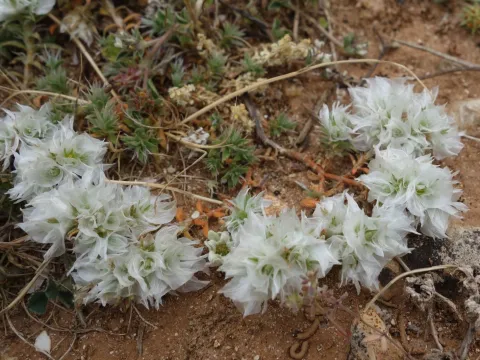
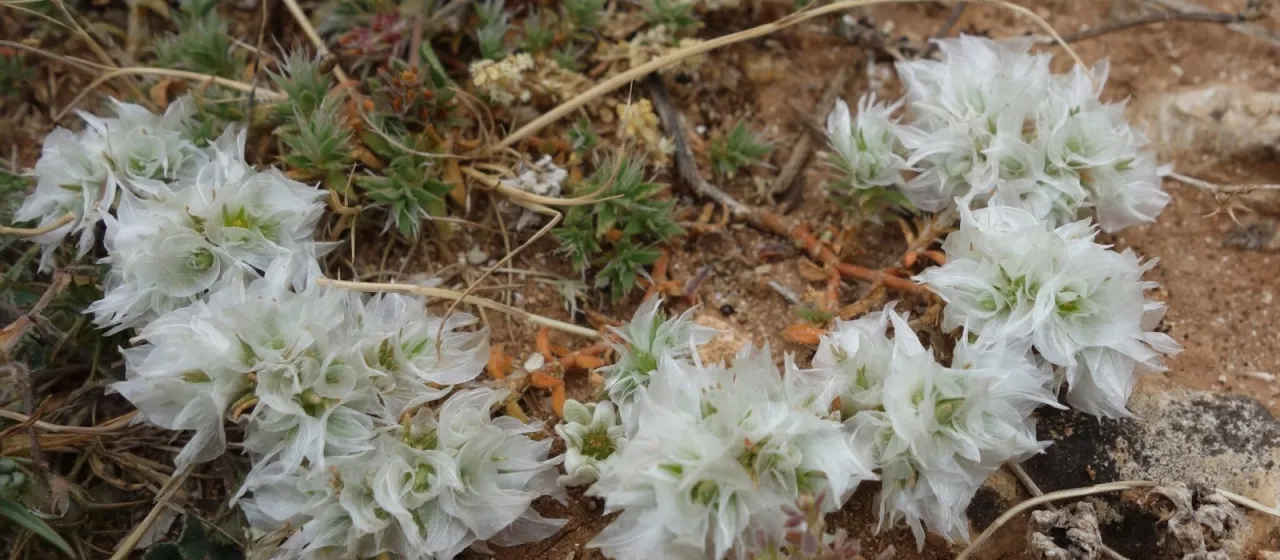
Botanically, the plant is distinguished by its small, opposite leaves and characteristic white or silvery bracts surrounding the flowers, which form compact heads. These silvery bracts provide a unique aesthetic appeal, making the plant visually striking even when not in full bloom. The root system is resilient, allowing it to penetrate deep into fissures to access moisture.
In terms of cultivation, Paronychia capitata requires full sun exposure and extremely well-draining soil. It is highly intolerant of waterlogged conditions, which can lead to rapid root rot. The ideal growing medium is a lean, gritty substrate that mimics its natural habitat. Regular fertilization is generally unnecessary and potentially harmful to the plant's natural compact growth.
The main horticultural use of this plant is in rock gardens, gravel beds, and xeriscaping projects. It serves as an excellent erosion control plant for steep, dry banks. Because of its drought tolerance, it is a staple in low-maintenance landscaping designs where water conservation is a priority.
Common issues include fungal pathogens that manifest when humidity levels remain consistently high or when soil drainage is poor. Pests are rarely a major threat, though aphids may occasionally colonize the tips of the shoots during spring growth. Proper air circulation and minimal watering in winter are key to maintaining a healthy specimen.
Photo gallery