Description
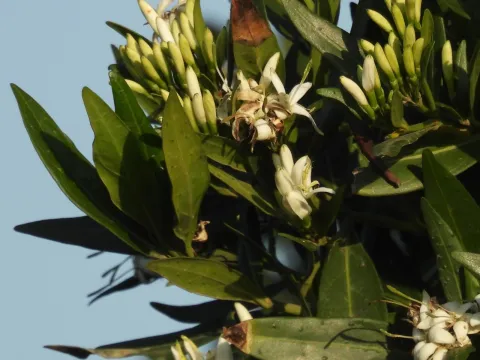
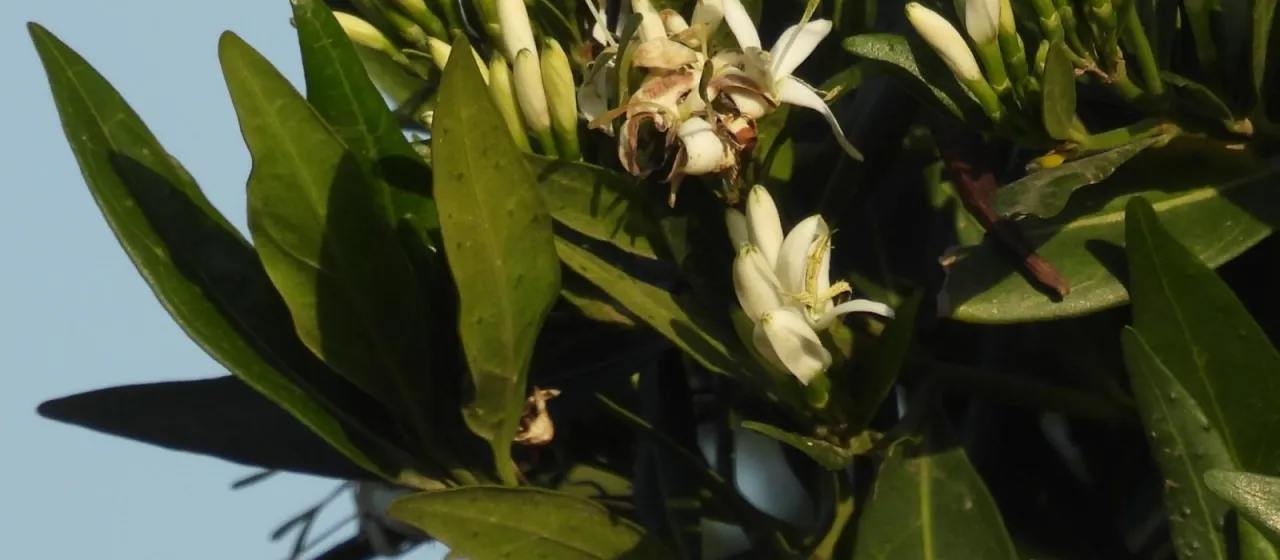
Pavetta lanceolata, commonly known as the Weeping Bride's Bush, is an evergreen shrub or small tree belonging to the Rubiaceae family. It is a highly regarded ornamental plant in tropical and subtropical landscaping, celebrated for its dense foliage and clusters of fragrant, showy flowers.
Originating from the tropical and subtropical regions of Eastern and Southern Africa, this plant is naturally found in coastal forests, forest margins, and along riverbanks. Its native habitat provides a consistent level of atmospheric humidity and partial shade, which are key environmental factors for its successful development.
The botanical structure of Pavetta lanceolata features dark green, glossy, lance-shaped leaves that are arranged in an opposite pattern along the stems. The plant produces dense, corymb-like inflorescences of white or cream-colored tubular flowers, which are highly scented. These are followed by small, succulent black drupes that serve as a food source for various local avian species.
Regarding agrotechnical requirements, the species performs best in well-drained, nutrient-rich soils with a slightly acidic to neutral pH. It thrives in locations that provide filtered light; intense, direct sun can damage the foliage, while complete shade reduces flowering significantly. Soil moisture should be maintained steadily, avoiding prolonged periods of drought or waterlogged conditions.
Economically and decoratively, it is utilized as an ornamental hedge plant or as a specimen shrub in landscape designs. Due to its adaptation to container life, it is also a popular choice for conservatory or patio gardening in temperate climates, provided that it is protected from frost and cold winds during the winter season.
- Pests: Susceptible to scale insects and spider mites, particularly in indoor or dry conditions.
- Diseases: May develop root rot or fungal leaf spots if soil drainage is inadequate or humidity is excessive.
- Propagation: Primarily propagated through stem cuttings taken during the active growth phase.
Photo gallery