Pecan
Carya illinoinensis (Wangenh.) C. Koch
Description
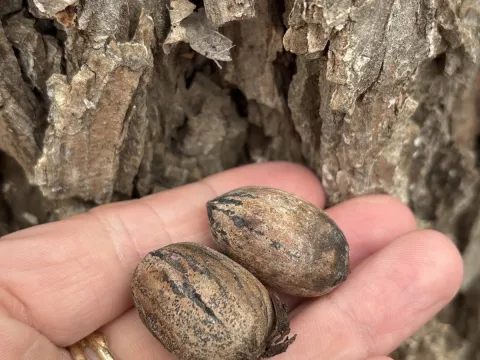
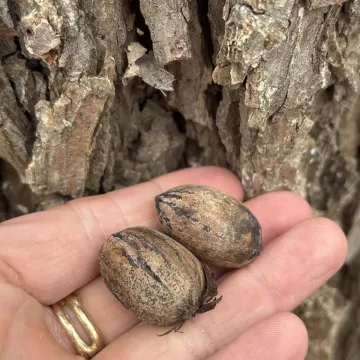
The Pecan (Carya illinoinensis) is a prominent species of hickory in the Juglandaceae family. It is a large, deciduous tree native to the southern United States and northern Mexico. Known globally for its edible nut, which is rich in heart-healthy fats and minerals, the pecan tree is a cornerstone of commercial nut production in several temperate and subtropical regions of the world.
The historical origin of the pecan is linked to the floodplains of the Mississippi River. Nowadays, it is cultivated extensively across North America, Australia, and parts of South America and Europe. The tree thrives in long, hot summers, which are critical for the kernel development process. It is a long-lived species, often reaching maturity after several years and continuing to bear fruit for over a century.
Botanically, the pecan is characterized by its deep taproot and pinnately compound leaves. It is monoecious, meaning it produces both male and female flowers on the same tree, yet it requires cross-pollination between different cultivars to ensure optimal fruit set. The nuts are enclosed in a husk that splits naturally upon maturity, allowing for efficient harvesting and processing.
Agronomic requirements for pecan cultivation demand fertile, deep, well-drained soils. Soil moisture management is paramount, as the tree requires substantial water during the growing season but is sensitive to waterlogging. Fertilization programs must be meticulously managed, often requiring specialized micronutrients like zinc to prevent chlorosis and ensure strong growth and high yields in commercial orchards.
- Soil site selection with high water retention capacity
- Selection of cross-compatible cultivars for pollination
- Orchard spacing to ensure canopy airflow
- Monitoring for common pests like the pecan weevil and aphids
- Preventive fungal management for diseases like pecan scab
Economically, the pecan is highly valued for its kernels, which are used extensively in the confectionery, bakery, and snack industries. Beyond food production, the wood of the pecan tree is highly sought after in the furniture and flooring industries due to its impressive density, shock resistance, and rich color. It is also used as a fuel source for traditional barbecue smoking to impart unique flavor.
Photo gallery