Description
The Slender beardtongue (Penstemon gracilis) is a perennial herbaceous plant belonging to the Plantaginaceae family. It is a highly valued species in ornamental horticulture, appreciated for its elegant appearance and its naturalistic appeal in landscape design.
Native to North America, the species naturally inhabits prairies, meadows, and open woodlands across Canada and the central United States. It is widely cultivated in temperate regions, where it has proven to be a resilient plant, adapting well to the conditions of modern gardens while maintaining its hardy, wild-plant characteristics.
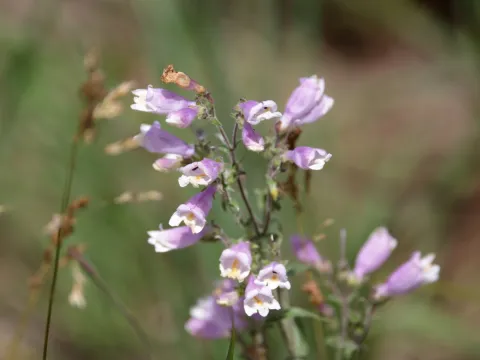
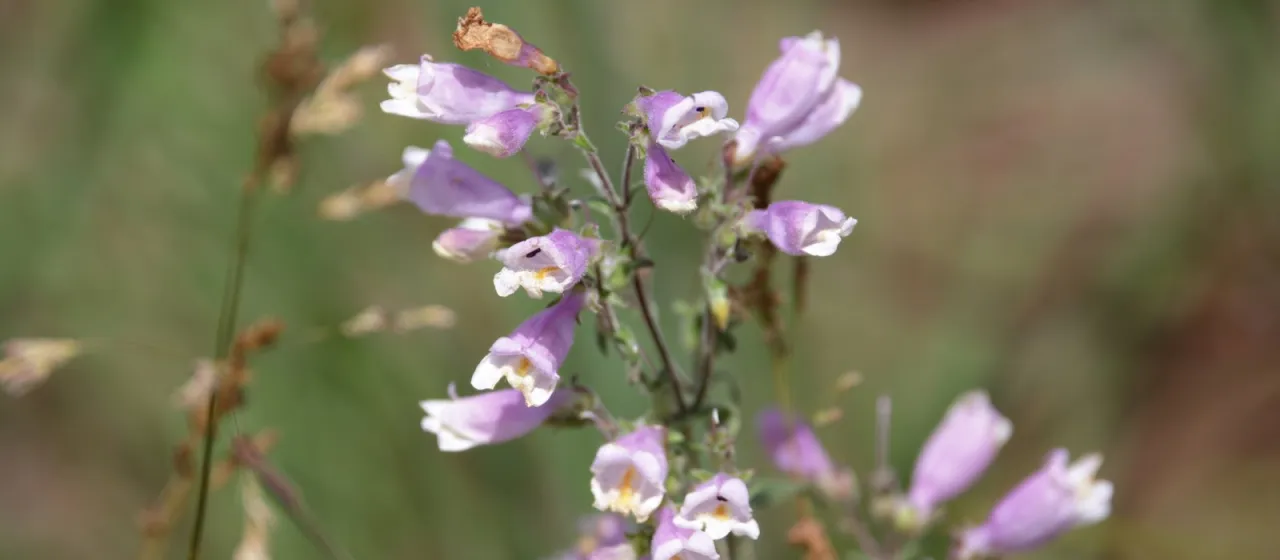
Botanically, this plant produces upright stems reaching heights of 20 to 50 centimeters. The foliage is characteristically linear-lanceolate and arranged in an opposite pattern along the stem. The inflorescence is a loose panicle of tubular, lipped flowers. The colors typically range from pale pink to light lilac, contributing to the delicate aesthetic of the plant during its blooming season in early and mid-summer.
The agronomic requirements for Penstemon gracilis focus on well-draining soils, preferably sandy or loamy textures, to prevent root rot. It thrives in full sun but can tolerate light shade. Proper soil moisture management is critical; while it requires water during establishment, it is moderately drought-tolerant once mature. Regular weeding and the removal of spent flowers are essential practices for maintaining plant vigor.
In terms of usage, the Slender beardtongue is exclusively an ornamental crop. It is perfect for rock gardens, wildflower meadows, and mixed borders. Its presence in the garden is beneficial, as it acts as a magnet for native pollinators, including bumblebees and various solitary bees, thus supporting local ecosystem services.
- Prefers sunny locations with excellent drainage.
- Adapts well to slightly acidic to neutral soil types.
- Requires minimal fertilization to prevent weak, leggy growth.
- Easy to propagate via seeds or division of established clumps.
- Good resistance to cold, suitable for temperate climates.
Like many plants in the genus, Penstemon gracilis can be susceptible to fungal issues such as powdery mildew or leaf spot if air circulation is poor or humidity is too high. Potential pests include aphids, which may cluster on new growth. Prevention through proper spacing and avoiding overhead irrigation typically minimizes the need for chemical pest or disease control.
Photo gallery