Philodendron melanochrysum
Philodendron melanochrysum
Description
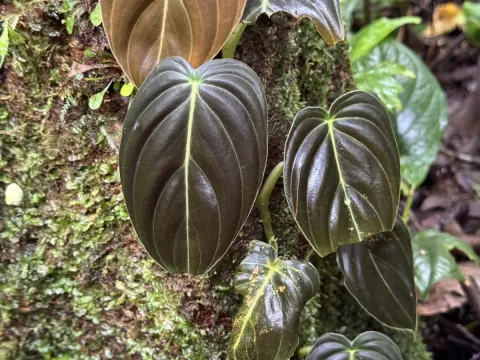
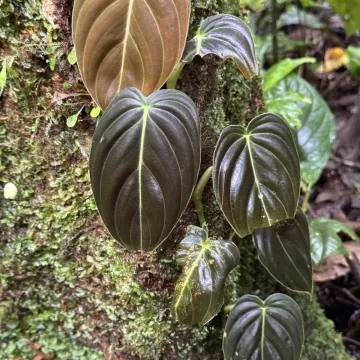
Philodendron melanochrysum, commonly known as the black-gold philodendron, is a distinguished member of the Araceae family. This tropical evergreen climber is widely recognized in the horticultural industry for its spectacular, large, velvety leaves that exhibit a deep, dark green hue accented by contrasting shimmering golden-yellow venation, making it a highly sought-after ornamental crop.
The species is native to the tropical rainforests of Colombia. In its natural habitat, it functions as an epiphyte, utilizing trees as a scaffold to reach the canopy. Commercially, it is cultivated primarily in specialized greenhouses and nurseries where environmental controls allow for the consistent production of premium quality plants for the interior design and collector markets.
Botanically, the plant is characterized by its elongated, heart-shaped leaves that can reach substantial sizes when provided with adequate vertical support. As a climbing vine, it produces adventitious roots at the nodes, which assist in anchorage and nutrient absorption when attached to moss poles or other organic support structures. The growth rate is moderate, provided that the light and nutritional requirements are fully satisfied.
Agricultural management for this species requires a stable environment with temperatures between 20°C and 25°C. Humidity levels should be kept consistently high to maintain the turgor and health of the velvety foliage. The growing medium must be highly porous and well-draining, typically consisting of bark, sphagnum peat, and perlite, which ensures optimal aeration while preventing the development of root rot due to excessive moisture retention.
- Position in bright, indirect light to protect the delicate leaf texture.
- Apply balanced, diluted liquid fertilizers during the active growing season.
- Monitor humidity levels to prevent dehydration and leaf curling.
- Repot every 1–2 years to provide fresh substrate and room for roots.
Pest management is a critical aspect of cultivating Philodendron melanochrysum. The plant is susceptible to common greenhouse pests such as spider mites, mealybugs, and scale insects, particularly in environments with poor air circulation or low humidity. Diseases are often related to improper water management, where waterlogged soil leads to root decay and various fungal leaf spot pathogens that compromise the aesthetic and biological integrity of the plant.
Photo gallery