Piliostigma malabaricum
Piliostigma malabaricum
Description
Piliostigma malabaricum is a prominent member of the Fabaceae family, widely recognized for its ecological utility in tropical climates. This leguminous tree serves as a critical component in land restoration projects and sustainable agroforestry systems across South and Southeast Asia.
The native distribution of this species spans across the Indian subcontinent and Southeast Asian nations. It is typically found in diverse habitats, including secondary forests, grasslands, and disturbed sites. Its ability to colonize marginal lands makes it a vital tool for preventing soil erosion and improving soil nitrogen levels.
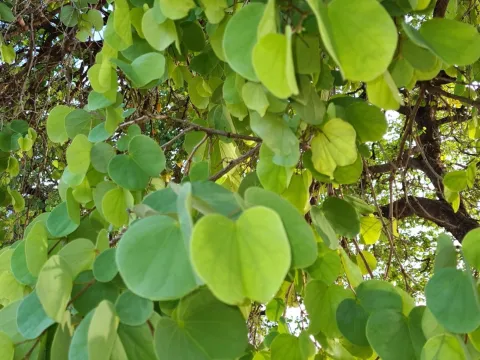
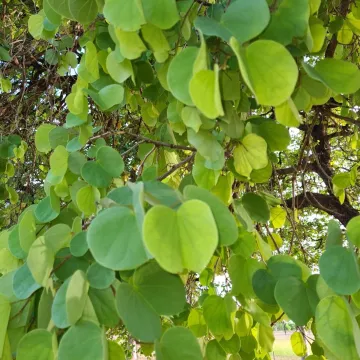
Morphologically, the plant appears as a deciduous tree with a spreading canopy. A distinct botanical feature is its bifoliate leaves, which resemble a butterfly's wings or a cow's hoof. The tree produces large, creamy-white flowers followed by persistent, flat, woody pods, which facilitate natural propagation and provide habitat for various insect species.
Regarding cultivation, Piliostigma malabaricum is remarkably hardy. It thrives in tropical climates characterized by distinct wet and dry seasons. While it performs best in well-draining soils, it exhibits significant tolerance for nutrient-poor or acidic substrates. Propagation is usually achieved through seeds, which should be soaked or scarified to enhance germination rates.
The tree provides numerous socioeconomic benefits:
- The leaves and floral buds are consumed in local diets.
- The bark provides strong fibers used in traditional weaving and rope making.
- Various extracts are utilized in traditional medicine for their therapeutic properties.
- The biomass acts as an effective source of firewood and high-quality charcoal.
Common agricultural challenges involve the management of leaf-eating larvae and potential fungal outbreaks during prolonged rainy periods. Effective management includes thinning the canopy to promote airflow and implementing proper spacing between trees to prevent the rapid spread of soil-borne pathogens in nursery or plantation settings.
Photo gallery