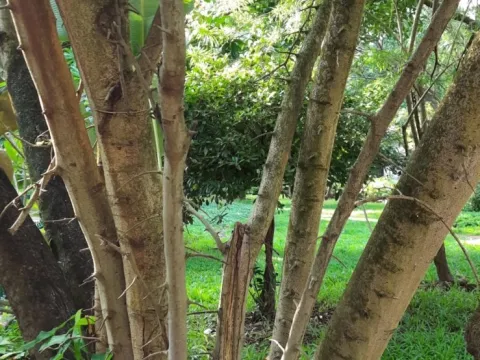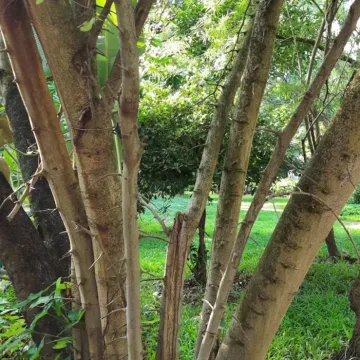
Piliostigma rufescens
Piliostigma rufescens
Description
Piliostigma rufescens is a perennial woody plant belonging to the Fabaceae family, subfamily Caesalpinioideae. This species is widely recognized for its ecological and agricultural value, particularly in the Sahelian and Sudanian ecological zones of Africa, where it serves as a critical component of local subsistence farming.
The plant originates from the arid and semi-arid regions of sub-Saharan Africa. Its distribution ranges across the continent, adapting to harsh environments characterized by prolonged dry seasons and erratic rainfall. Due to its evolutionary success in these challenging habitats, it is highly valued for agroforestry programs aimed at desertification control and land rehabilitation.
Botanically, it is a small to medium-sized tree with distinctive bilobed leaves and woody, indehiscent pods that turn brown upon ripening. The tree possesses a robust root system, which is vital for nutrient uptake and soil stabilization. Its flowers are typically showy, attracting pollinators, and the overall architecture of the plant allows it to thrive in diverse landscape types.
In terms of agricultural requirements, the species is remarkably resilient, preferring well-drained, sandy, or loamy soils. It requires full sunlight to optimize growth and is highly drought-tolerant once established. Seedling establishment is the most critical phase, necessitating protection from browsing animals and occasional weeding. Once mature, it requires little to no maintenance, making it a low-input, high-reward crop.
The economic and agricultural utility of the tree is extensive:
- Providing essential forage for goats, sheep, and cattle during the dry season.
- Serving as a source of medicinal extracts used in traditional healthcare systems.
- Producing fiber from the bark for ropes and construction materials.
- Improving soil fertility through biological nitrogen fixation and leaf litter deposition.
- Providing shade for livestock and protecting smaller shade-demanding crops.
The primary threats to Piliostigma rufescens include potential fungal infections in overly humid climates and various seed-boring beetles that target the pods. However, these issues are generally manageable in traditional agroforestry systems. Given its resilience, it remains a sustainable and ecologically sound choice for sustainable land management in tropical regions.
Photo gallery