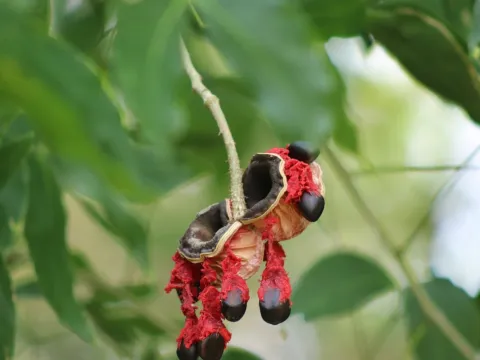

Pithecellobium lanceolatum
Pithecellobium lanceolatum
Description
Pithecellobium lanceolatum is a fast-growing tree species within the Fabaceae family. Known for its adaptability, this plant plays a crucial role in tropical agricultural landscapes by providing both environmental stability and sustainable resources for local farming communities.
Originally native to Central and South America, the species has spread throughout various tropical regions. Its ability to colonize different environments has made it a subject of interest for forestry projects aimed at restoring natural cover and protecting soil health in warm climate zones.
The botanical structure of this plant features distinct pinnate leaves and coiled pods typical of its family. It has developed efficient physiological mechanisms to thrive in high-temperature environments, including a root system that supports stability and moisture uptake even in suboptimal soil conditions.
For successful cultivation, Pithecellobium lanceolatum requires exposure to abundant sunlight and well-drained soil. While it is relatively hardy once established, early management involves protecting seedlings from weeds and providing adequate spacing to allow for its lateral crown growth. It shows high resilience against typical tropical tree pathogens.
The primary economic value of this culture lies in its use for erosion control, windbreaks, and soil nitrogen enrichment. Due to its nitrogen-fixing capabilities, it is often utilized in agroforestry to improve soil quality for secondary crops, while its wood is harvested for construction and thermal energy production.
- Excellent soil stabilizer for hilly terrain.
- Nitrogen-fixing properties to enhance soil fertility.
- High-quality fuel wood production.
- Low maintenance requirements after the seedling stage.
Photo gallery