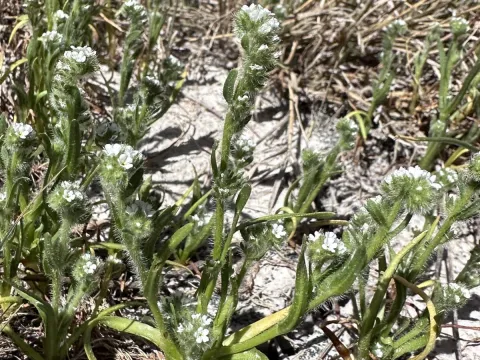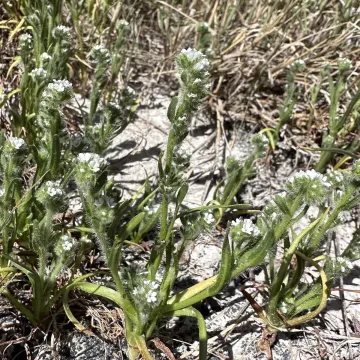
Plagiobothrys salsus
Plagiobothrys salsus
Description
Plagiobothrys salsus is a specialized herbaceous plant belonging to the Boraginaceae family. It is a rare halophytic species adapted to life in high-salinity environments, making it a subject of significant interest for botanical research concerning plant stress tolerance and adaptation to extreme ecological conditions.
The native range of this species is confined to arid regions within North America, specifically identified in alkaline habitats in Nevada. It thrives in soils where the osmotic pressure is high due to salt concentrations, effectively occupying a niche where common commercial agricultural crops would fail to survive or develop.
Botanically, Plagiobothrys salsus is characterized by a short lifecycle as an annual, with leaf and stem structures typically featuring trichomes (hairs) that minimize water loss through transpiration. Its root system is highly evolved to extract moisture from concentrated soil solutions, demonstrating a sophisticated physiological response to saline stress.
Regarding cultivation requirements, this plant is not a commercial crop and is primarily managed in its natural state. Successful propagation requires strict adherence to natural light cycles, soil pH levels, and specific moisture availability patterns. The plant is extremely sensitive to changes in soil texture and is generally outcompeted by non-specialized opportunistic vegetation.
The primary utility of the species lies in scientific exploration, particularly in understanding salinity tolerance markers for genetic improvement of traditional crops. It also plays a role in identifying restoration strategies for degraded saline lands. Pests and diseases are not currently considered a limiting factor for this species, as it exists in low-density, specialized ecological niches.
Photo gallery