Scouler's popcorn flower
Plagiobothrys scouleri
Description
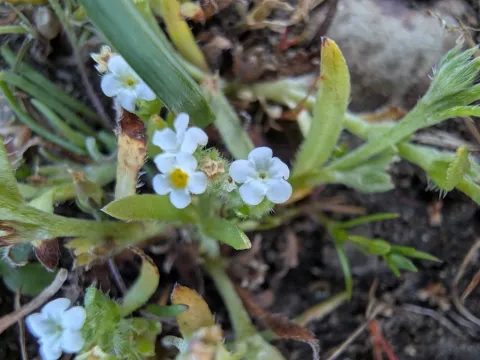
Scouler's popcorn flower, scientifically known as Plagiobothrys scouleri, is an annual herbaceous plant in the Boraginaceae family. While not a conventional agricultural crop, it serves as an important ecological indicator and a component of grassland ecosystems in its native range.
The plant is native to western North America, where it occupies specific ecological niches. It is primarily found in moist environments, such as vernal pools, damp meadows, and along the edges of streams or seasonal marshes. These habitats are characterized by soils that remain saturated during the early stages of the plant's life cycle.
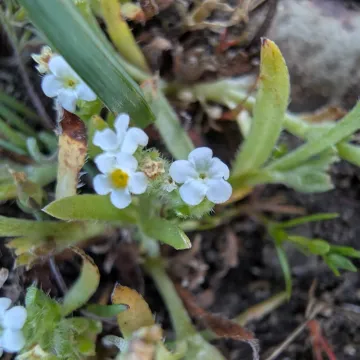
Botanically, the species is defined by its hirsute, or hairy, texture, which covers both the stems and the narrow, lance-shaped leaves. The flowers are small, white, and arranged in a coiled inflorescence that uncurls as they bloom. The fruits are typically small nutlets, which are a characteristic feature for identifying members of the genus Plagiobothrys.
The cultivation requirements are dictated by the plant's natural preference for seasonal moisture. It thrives in soils with high water retention capacity, such as clays or heavy silts. In terms of agronomy, it requires little to no intervention, provided that the soil hydrology remains consistent with its native habitat requirements during the germination phase.
Its economic and practical use is primarily focused on environmental management:
- Restoration of seasonal wetlands and riparian areas.
- Inclusion in seed mixes for rehabilitating damaged ecosystems.
- Providing a critical food source for native pollinators in early spring.
Regarding health and protection, Scouler's popcorn flower does not suffer from significant pests or diseases that would impact a controlled crop. The most substantial threat to its survival is the conversion of wetland habitats for agriculture or development. Maintaining the natural hydrological cycle is the best management strategy for ensuring the persistence of this species.
Photo gallery