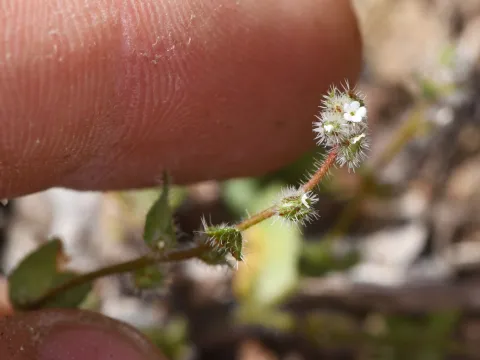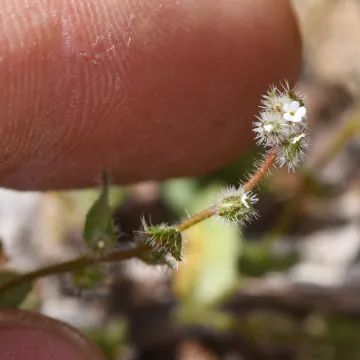
Hooked popcorn flower
Plagiobothrys uncinatus
Description
Hooked popcorn flower (lat. Plagiobothrys uncinatus) is an herbaceous annual plant belonging to the Boraginaceae family. This species is of primary interest to botanical specialists and collectors of rare wild plants that possess potential for inclusion in specialized landscaping or restoration projects.
The plant originates from the western regions of North America, specifically occurring within California. In its natural habitat, it favors unique ecological niches such as moist meadows, vernal pools, and areas with seasonal flooding, which dictates its adaptive mechanisms for water regulation throughout the growing season.
Botanically, the plant is characterized by erect or ascending stems covered in coarse, bristly hairs. The leaves are lanceolate or linear in shape and are arranged alternately. Small, white flowers are arranged in coiled inflorescences, a hallmark feature of many members of the Boraginaceae family. The fruits are nutlets featuring a distinctive hooked surface, which serves as the inspiration for the specific epithet.
The crop has specific requirements regarding light exposure and soil moisture. Optimal development occurs in well-draining yet moisture-retentive loams with a neutral to slightly acidic pH level. In cultivation, it is essential to ensure adequate sunlight access and avoid water stagnation, as improper drainage can lead to root rot during the seedling establishment phase.
- Requires open sunlight for optimal flowering
- Prefers moisture-retentive, well-draining loamy soils
- Susceptible to powdery mildew in high-density planting
- Sensitive to excessive soil compaction
Current economic or agricultural use is limited to niche restoration and ornamental wild-style gardening. Typical pests and diseases for this species are consistent with the broader Boraginaceae family: growers should watch for powdery mildew caused by overcrowding and insect damage from aphids or spider mites, which can be managed with standard horticultural practices.
Photo gallery