Heuffel's needleleaf
Polycnemum heuffelii
Description
Heuffel's needleleaf (Latin: Polycnemum heuffelii) is a member of the Amaranthaceae family, known for its resilience and adaptation to harsh environments. As an annual herb, it has evolved to occupy specific ecological niches that are often challenging for more traditional crops.
The plant is native to Central and Southeastern Europe. Its geographical range typically spans across arid, stony terrain, and regions characterized by limestone or sandy soils. It has historically adapted to environments where water retention and mineral accessibility are the primary limiting factors for growth.
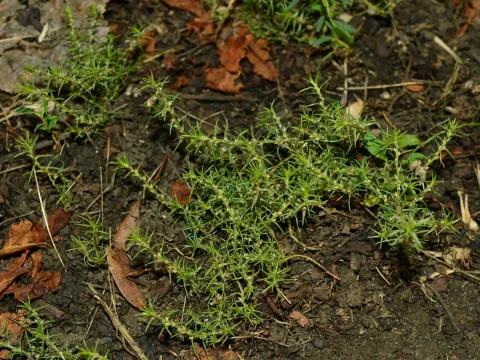
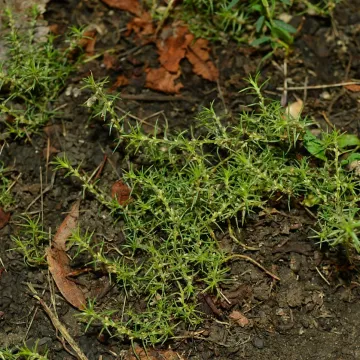
From a botanical perspective, the plant features slender, lanceolate leaves with sharp tips and small, inconspicuous flowers nestled in leaf axils. The structure is designed to minimize transpiration, making the plant highly efficient in water use, which is a key trait of the genus Polycnemum.
Regarding climate and soil, this species prefers high solar radiation and well-drained, alkaline or calcareous substrates. Modern agricultural management of this plant, when it occurs within cultivated areas, requires careful soil cultivation to avoid disrupting the surface layer where its shallow but effective root system resides.
In terms of economic utility, the plant serves primarily as an ecological indicator in land management programs. While it is not commercially harvested as a primary crop, it plays a vital role in restoring degraded ecosystems, particularly in regions prone to soil erosion and desertification.
Common issues affecting its growth include:
- Susceptibility to fungal diseases during periods of high humidity.
- Infestation by sap-sucking insects in early summer.
- Sensitivity to soil compaction caused by heavy machinery.
Photo gallery