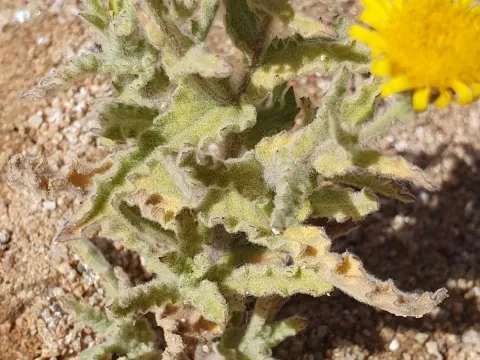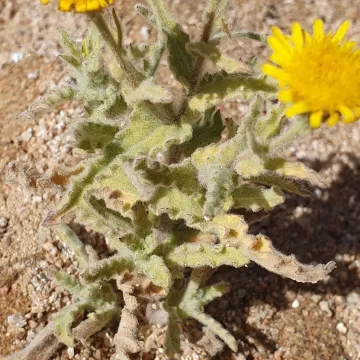
Pulicaria incisa
Pulicaria incisa
Description
Pulicaria incisa is a perennial herb belonging to the Asteraceae family. Known for its resilience in arid environments, this plant represents a specialized agricultural interest, particularly for regions facing desertification or limited water resources where standard crops fail to thrive.
The plant originates from the arid regions of North Africa and the Arabian Peninsula. Its natural habitat includes rocky slopes and sandy soils where it has evolved to withstand extreme solar radiation and low precipitation levels, marking it as a highly specialized xerophyte in the global flora.
Botanically, it is characterized by its distinctively incised (toothed) leaves and branched stems. The plant produces small, bright yellow flower heads that are typical for the genus Pulicaria. Its root system is exceptionally efficient, designed to penetrate compact soils to extract scarce mineral and water reserves during the growth cycle.
Agrotechnical requirements focus on excellent drainage and minimal irrigation. Unlike traditional agricultural crops, Pulicaria incisa requires very low soil fertility levels. Excessive nutrient application, particularly nitrogen, often inhibits the production of secondary metabolites, which are crucial for the plant's medicinal value.
Key areas of хозяйственное (economic) utilization include:
- Pharmaceutical production: extraction of compounds with antimicrobial and anti-inflammatory activity.
- Traditional medicine: applications in wound healing and digestive health.
- Aromatic industry: harvesting of essential oils for specialized fragrance or repellent formulations.
The primary agricultural challenges include the management of fungal pathogens that proliferate if the crop is kept in poorly drained soil. Insect pests in the wild are primarily controlled by the plant's natural chemical defenses, but in cultivation, monitoring for aphids and spider mites remains a standard precautionary measure.
Photo gallery