Water avens
Geum rivale L.
Description
Water avens (Geum rivale L.) is a perennial herbaceous plant belonging to the Rosaceae family. Within agricultural and horticultural practices, it is recognized as a hardy crop suitable for wet soil conditions and as a source of valuable phytochemicals.
The species is native to the temperate and boreal regions of the Northern Hemisphere, spanning Europe, Asia, and North America. It typically grows in damp habitats, such as wetlands, riverbanks, and shaded forest margins. Its natural resilience allows it to thrive in climates that are often too challenging for other crops.
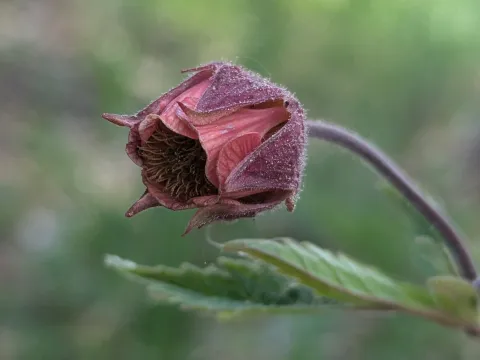
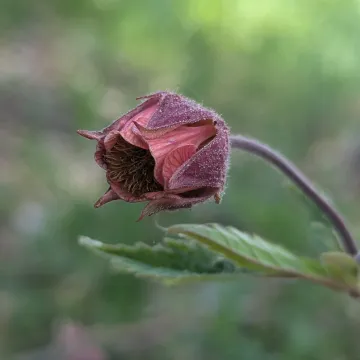
Botanically, it features a thick rhizome and upright, hairy stems reaching up to 70 cm in height. A distinctive feature is its drooping, bell-shaped flowers with reddish-brown sepals. The plant propagates both via seeds and through the expansion of its creeping root system, ensuring stable population growth in suitable environments.
Successful cultivation requires soil that remains consistently moist and is rich in organic matter. While it prefers partial shade, it can adapt to various conditions provided there is sufficient moisture. Agricultural management focuses on soil moisture maintenance and occasional thinning to prevent fungal diseases that often affect dense plant stands.
Economically, the plant is valued for its rhizomes, which are rich in tannins and essential oils used in pharmaceuticals for their astringent and anti-inflammatory properties. Furthermore, it is increasingly used in landscape architecture to stabilize the soil along water bodies and as a pollinator-friendly species.
- Exceptional tolerance to saturated soils.
- High content of medicinal tannins in rhizomes.
- Minimal requirement for fertilization if soil is rich in humus.
- Susceptible to leaf spot if ventilation is poor.
Photo gallery