Biriba
Rollinia mucosa
Description
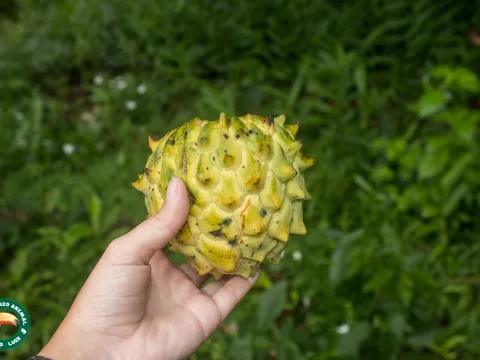
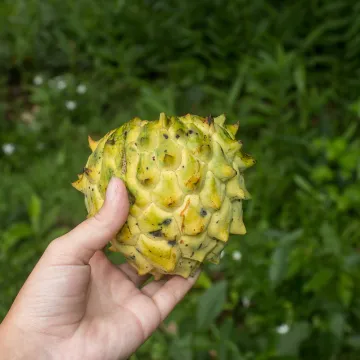
Biriba, scientifically classified as Rollinia mucosa, is a tropical fruit tree belonging to the Annonaceae family. This species is highly regarded for its delicious, custard-like fruit which features a unique rind covered in soft, fleshy spines that darken upon maturity, signaling the optimal harvest time.
Originating from the tropical regions of South America, specifically the Amazon basin, the tree has been naturalized in various tropical areas worldwide. It thrives in warm, humid climates and is now a significant local crop in countries throughout the Caribbean, Southeast Asia, and northern Australia, where it is valued for its rapid growth.
Botanically, the tree is characterized by broad, alternate leaves and distinctive, complex flowers. It is an evergreen species that can reach significant heights if left unpruned. The fruit, often called the wild sweetsop, contains a sweet, aromatic, and creamy pulp, highly perishable, which defines its role as a local market specialty rather than a long-distance export commodity.
Cultivation requires strict adherence to environmental parameters, as the plant is intolerant to frost and prefers stable, warm temperatures between 22°C and 30°C. It requires deep, well-draining loamy soils with a slightly acidic reaction. Agricultural management includes routine irrigation, consistent fertilization with organic matter, and canopy management to promote air circulation.
The economic utilization of Biriba focuses primarily on fresh consumption and culinary applications such as smoothies, ice cream, and desserts. In addition to its fruit, the tree serves as a shade plant in agroforestry systems and provides wood that is lightweight and suitable for various utility purposes in local construction, underscoring its versatility.
- Thrives in high-humidity tropical conditions with adequate rainfall.
- Susceptible to wind damage due to its brittle wood structure.
- Common pests include mealybugs and various fruit fly species.
- Propagation is best achieved through grafting to ensure fruit quality.
- Requires mulching to retain soil moisture and suppress weed competition.
Photo gallery