Rose of Sharon
Hibiscus syriacus L.
Description
The Rose of Sharon (Hibiscus syriacus L.) is a deciduous flowering shrub belonging to the Malvaceae family. Known for its hardiness and long-lasting blossoms, it is a staple of temperate climate landscapes. The plant serves as a prominent ornamental species, valued for its ability to produce vibrant, large flowers throughout the late summer season when many other shrubs have finished blooming.
Originating from temperate regions of East Asia, including China and Korea, this species has been introduced and naturalized across many parts of the globe. It is widely cultivated for its adaptability to varying urban environments, making it a popular choice for public gardens, parks, and residential landscapes where a resilient, woody shrub is required.
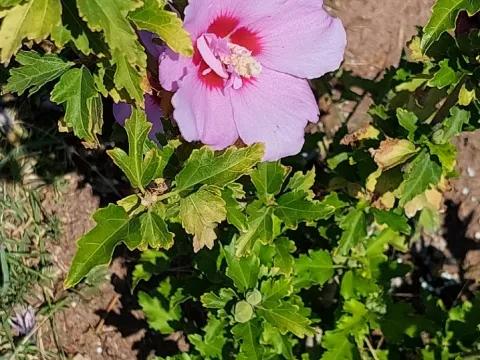
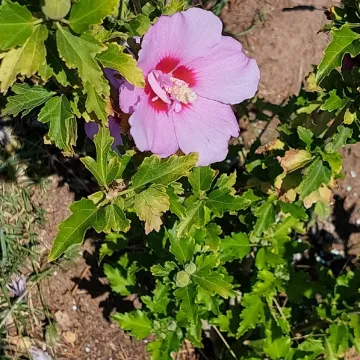
Botanically, the plant develops an upright, vase-shaped growth habit, typically reaching heights of up to three meters. The leaves are ovate, often with a serrated margin, and may display three lobes. The iconic flowers feature a prominent central column of stamens and are available in a wide spectrum of colors, including shades of violet, pink, red, white, and bicolored patterns.
Agronomically, this species thrives in full sun, which is essential for maximizing flower production. It prefers well-draining, slightly acidic to neutral soil that is rich in organic matter. Maintenance involves standard pruning in late winter to remove dead wood and encourage new growth, as the flowers are produced on current-season wood. During periods of drought, supplemental irrigation is necessary to prevent premature bud drop.
- Mulching around the base to retain soil moisture.
- Balanced fertilization in early spring to support blooming.
- Monitoring for soil pH balance to prevent chlorosis.
- Winter protection in colder geographic regions.
In terms of хозяйственное (economic) and landscape usage, the Rose of Sharon is used as a foundation planting, a specimen tree, or as a hedge. While generally hardy, the shrub can be susceptible to pests such as aphids and Japanese beetles. Diseases typically involve fungal issues such as leaf spot or blight, which are usually mitigated by ensuring good air circulation and avoiding overhead watering methods.
Photo gallery