Salal
Gaultheria shallon Pursh
Description
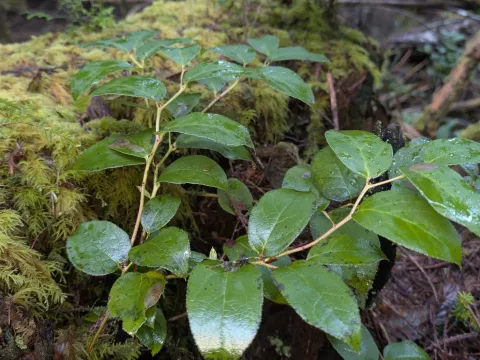
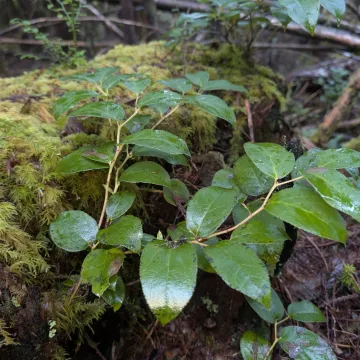
Salal (Gaultheria shallon Pursh) is a robust evergreen shrub belonging to the Ericaceae (heath) family. It is widely recognized for its dense, leathery foliage and creeping rhizomatous habit, which allows it to form extensive ground cover. The plant is a staple of North American forest understories and is increasingly valued in ornamental horticulture.
The native range of this species extends along the western coast of North America, from southern Alaska to California. It is highly adapted to mild, maritime climates with significant precipitation. Because of its ecological requirements, Salal thrives in environments that replicate the moisture levels and acidity of coniferous forest floors.
Botanically, the plant is characterized by its thick, ovate leaves that remain green throughout the winter. During late spring and early summer, it produces racemes of bell-shaped, white-to-pink flowers. These are followed by edible, dark-purple berries that were traditionally an important food source for Indigenous peoples and are now harvested for jams and preserves.
Cultivation success depends on meeting specific soil and moisture criteria. Salal requires acidic, well-draining soil rich in organic matter. It is sensitive to waterlogged conditions and direct, intense sunlight, which can cause leaf scorch. In garden settings, it is best placed in partial shade where soil moisture can be maintained consistently.
Economically, Salal is significant not only as a food crop but also as a staple in the cut-flower industry. Its branches are highly prized for their longevity and attractiveness, often used as green filler in floral arrangements. While generally hardy, growers must monitor for fungal issues like leaf spot and root rot, which are primarily caused by poor drainage and excessive irrigation.
Photo gallery