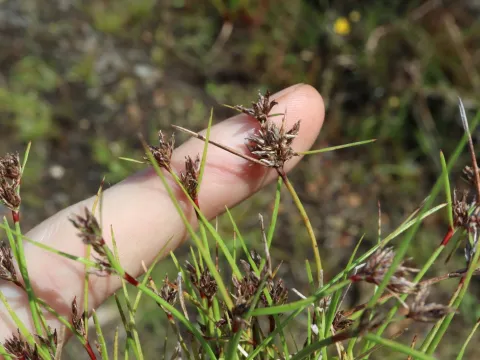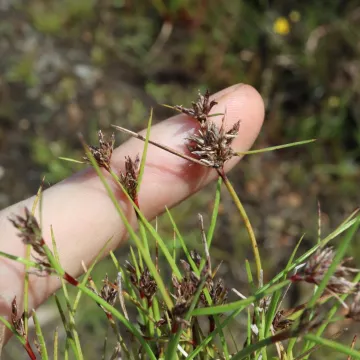

Schoenus apogon
Schoenus apogon
Description
Schoenus apogon is a perennial herbaceous plant belonging to the Cyperaceae family. Often referred to by its botanical name in specialized agricultural and botanical contexts, this species is highly regarded for its resilience and functional role in maintaining soil integrity in naturally waterlogged environments.
The plant originates from the Southern Hemisphere, with a significant presence in Australia, New Zealand, and parts of Southeast Asia. Its natural habitat includes wetlands, sedge meadows, and the margins of water bodies, where it thrives in hydric soil conditions that would be unsuitable for traditional upland crops.
Botanically, Schoenus apogon forms dense, tufted clumps of rigid, linear leaves. The stem structure is typically triangular, as is common among many sedges, and it supports terminal inflorescences composed of small, dark spikelets. This architecture allows the plant to withstand wind and water movement effectively.
Regarding agrotechnical requirements, the plant prefers acidic to neutral soils with consistent moisture availability. While it does not require intensive cultivation management, it thrives best in open light conditions. Soil preparation should focus on maintaining organic matter content, and the plant demonstrates a high tolerance for varying water tables throughout the growing season.
The primary utility of this plant lies in environmental restoration and sustainable landscape management. It is frequently employed in erosion control along banks and in phytoremediation projects. While generally hardy, the plant can be susceptible to fungal pathogens if drainage is severely compromised or if it is subjected to prolonged stagnation in warm, non-circulating water, which may lead to crown rot.
Photo gallery