Bog rush
Schoenus pauciflorus
Description
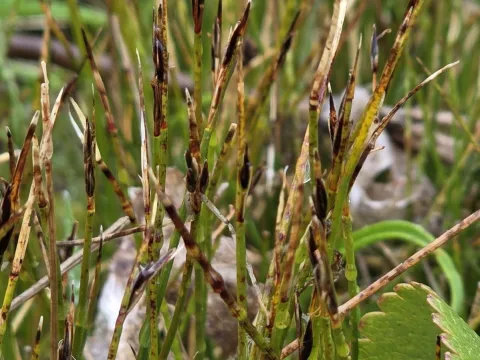
The Bog rush (Schoenus pauciflorus) is a perennial herbaceous plant belonging to the Cyperaceae family. Often confused with ornamental grasses due to its arching, wiry foliage, this plant is highly valued for its texture and ability to thrive in wet conditions. While not a conventional agricultural crop, it is a significant specialty plant in botanical gardens and modern landscaping.
This species is native to New Zealand, where it typically inhabits wetlands, peat bogs, and stream edges. Its geographical distribution reflects its preference for cool, humid environments with high precipitation. This ecological adaptation makes it a suitable candidate for cool-climate gardening where other ornamental plants might struggle due to moisture stress.
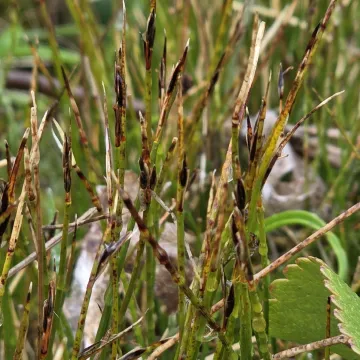
Botanically, the plant is characterized by its tufted growth habit. The leaves are narrow, hair-like, and semi-rigid, forming elegant, drooping clumps that can reach significant density. The inflorescences are inconspicuous, emerging on short stalks, which ensures the plant remains compact and visually consistent throughout the growing season.
When cultivating Schoenus pauciflorus, soil acidity and moisture are the primary factors. It performs best in acidic, damp, and nutrient-poor soils that mimic its natural bog habitat. Maintenance is generally low, requiring little to no fertilizer. In garden settings, it is essential to keep the soil consistently moist but avoid stagnant water conditions in extreme heat, which may lead to root suffocation.
The primary agricultural and horticultural uses of Bog rush are diverse:
- Design and installation of bog gardens and water features;
- Erosion control on moist, shaded slopes;
- Use as a specimen plant in minimalist landscape designs;
- Phytoremediation or water filtration in closed-loop garden systems.
Regarding health management, the plant is relatively pest-resistant. The most common threats are fungal infections resulting from poor air circulation or overcrowding. To maintain health, it is recommended to perform seasonal grooming by removing dead foliage and ensuring that the base of the plant receives adequate air flow, which helps prevent rot and keeps the plant vibrant.
Photo gallery