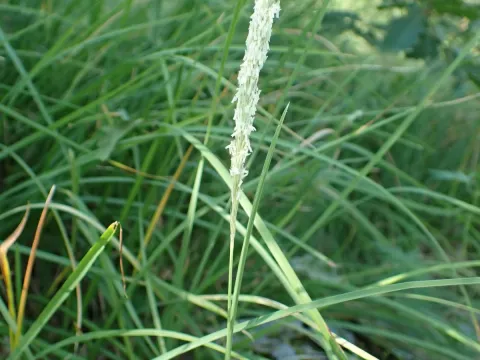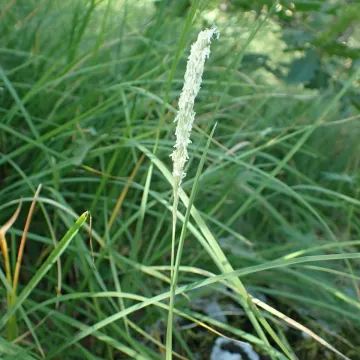
Autumn moor grass
Sesleria autumnalis
Description
Autumn moor grass (Sesleria autumnalis) is a perennial ornamental grass belonging to the Poaceae family. Known for its distinct yellowish-green foliage and late-season inflorescences, it is a staple in modern gardening and sustainable landscape design due to its hardiness and low-maintenance nature.
The species originates from the mountainous regions of Southern and Central Europe, particularly the Balkan Peninsula and Northern Italy. In its native habitat, it thrives on limestone soils and rocky outcrops. This evolutionary background makes it a highly resilient plant, capable of adapting to various temperate climates while maintaining excellent frost tolerance.
Botanically, Sesleria autumnalis grows in neat, compact tufts reaching a height of 30 to 50 cm. Its narrow leaves maintain a bright color throughout the growing season. The most striking feature occurs in late summer and autumn when the plant produces silvery-white spike-like panicles that remain attractive well into the winter months.
Agronomic requirements for this culture are relatively straightforward. The plant prefers full sun to light shade and requires well-drained soil. It is particularly well-suited to alkaline or limestone-rich substrates. Once established, the autumn moor grass exhibits significant drought tolerance, though it thrives best in consistent, moderate moisture levels without waterlogging.
In terms of agricultural and horticultural use, the autumn moor grass is valued for its versatility. Its key benefits in landscape management include:
- Strong ability to suppress weed growth through dense foliage.
- Excellent adaptability to various urban conditions.
- Low fertilization requirements, making it ideal for low-input gardens.
- High ornamental value throughout the extended growing season.
Pest and disease issues are rarely a concern for Sesleria autumnalis. It is a robust plant that shows little susceptibility to common garden pests like aphids. The primary management consideration is avoiding overly wet soil conditions in winter, which can lead to crown rot. Otherwise, it requires minimal intervention, usually limited to clearing old foliage in early spring.
Photo gallery