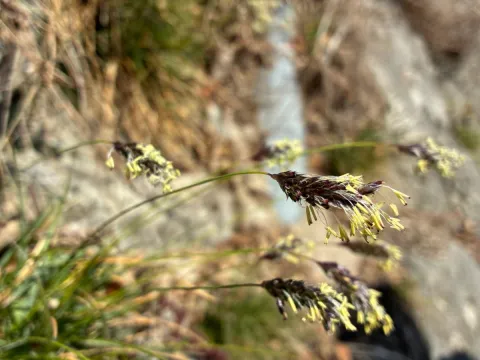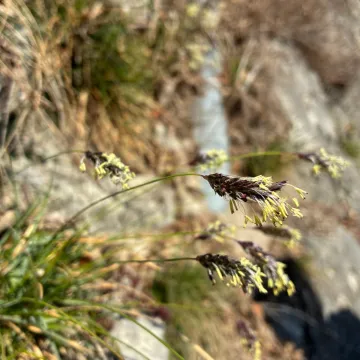
Blue moor grass
Sesleria caerulea
Description
Blue moor grass (Sesleria caerulea) is a perennial ornamental grass belonging to the Poaceae family. This species is widely recognized for its neat, mound-forming habit and its distinctive two-toned foliage, which presents a vivid green upper surface and a striking blue-gray underside, providing a sophisticated look in any landscape.
The plant originates from the limestone slopes and rocky grasslands of Europe, which has endowed it with excellent hardiness and tolerance for a wide range of soil conditions. It is particularly well-suited for temperate climates and thrives in regions where its need for well-drained substrate can be reliably met.
Botanically, it forms dense clumps reaching heights of 30–40 cm. The foliage remains evergreen in many regions, adding interest during the off-season. In late spring, the plant produces cylindrical, spike-like panicles that start with a purple-blue hue, eventually maturing into a soft, silvery-white color that remains attractive for several weeks.
Regarding cultivation, Sesleria caerulea prefers full sun to partial shade and is highly adaptable to various soil types, including chalky and stony soils. It is considered a low-maintenance plant, requiring little beyond an annual trim in early spring to remove old growth and occasional watering during prolonged summer droughts to maintain peak vigor.
Because of its robust nature and resilience, it is rarely troubled by pests or serious diseases, making it a reliable choice for commercial and residential landscaping. It is commonly used for groundcover, rock gardens, and border edges, serving as an excellent contrast plant alongside broader-leafed perennials and flowering shrubs.
Photo gallery