Sida acuta
Sida acuta Burm. f.
Description
Sida acuta, commonly known as wireweed, is a perennial herbaceous plant belonging to the Malvaceae family. Recognized for its tough stems and significant pharmacological potential, this plant has gained attention as both a fiber source and a raw material for various medicinal applications.
Originally native to the tropical regions of the Americas, Sida acuta has established itself across the pan-tropical belt, including parts of Africa, Asia, and the Pacific. It is highly adaptive, often colonizing disturbed habitats, which underscores its resilience when managed as a deliberate crop in agro-forestry or industrial settings.
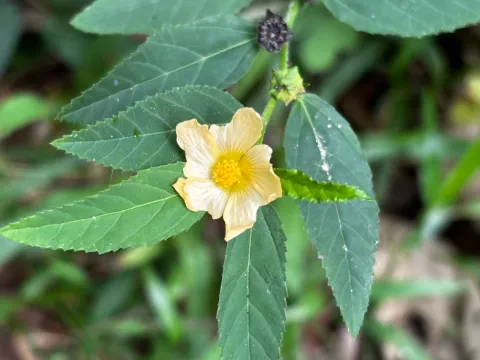
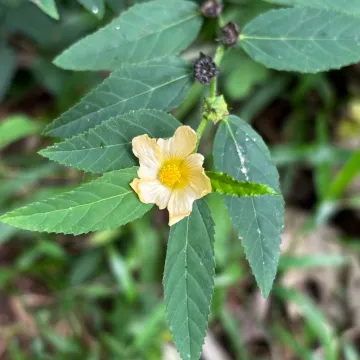
Botanically, the plant features narrow, lanceolate leaves with serrated edges and small, yellow, five-petaled flowers. Its most distinct feature is its highly fibrous stem, which provides significant structural integrity. The root system is deep and tap-rooted, enabling the plant to survive in diverse and sometimes marginal soil conditions.
When considering agricultural requirements, Sida acuta performs best in well-drained soils with good exposure to sunlight. While it is tolerant of drought, optimal yields are achieved in areas with consistent moisture during the early growth phase. Agronomic practices typically involve row planting to ensure even development and facilitate mechanical harvesting.
- Production of durable cordage and high-quality natural fibers.
- Extraction of alkaloids for pharmaceutical research and traditional medicine.
- Use in soil conservation to prevent erosion on degraded lands.
- Potential as a biomass source for sustainable industrial materials.
The plant is relatively hardy, but it remains susceptible to various pests, including spider mites, aphids, and beetles that feed on the foliage. Disease management, specifically regarding root pathogens, is crucial in humid environments. A balanced approach using crop rotation and proper site selection is recommended to minimize chemical input and maximize the long-term health of the crop.
Photo gallery