Sida spinosa
Sida spinosa L.
Description
Sida spinosa, commonly known as prickly sida, is an annual herbaceous plant belonging to the Malvaceae family. This species is widely recognized for its robust nature and adaptability, occurring naturally in tropical and subtropical regions across the globe. While often managed as a weed in modern agricultural systems, it possesses unique biological traits that warrant agronomic attention.
Originating from the Americas, Sida spinosa has established itself across various continents, thriving in disturbed soils, pastures, and roadsides. Its success as a species is driven by a strong taproot system and the ability to produce a large volume of seeds, ensuring its survival and persistence even under challenging environmental conditions.
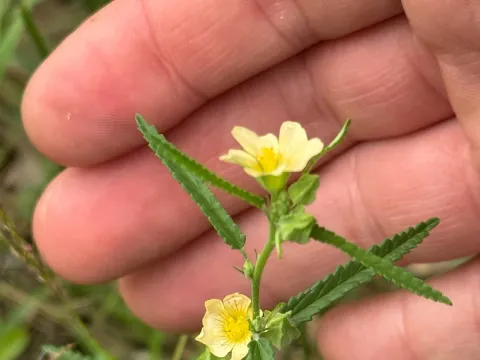
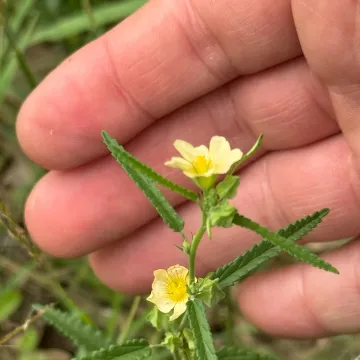
Botanically, the plant is characterized by an erect, branched stem, reaching heights typically between 20 and 80 centimeters. The specific epithet spinosa refers to the small, sharp stipular spines located at the base of the petioles. The leaves are ovate to oblong with serrated margins, while the small, pale yellow or white flowers emerge from the leaf axils during the growing season.
From an agronomic perspective, Sida spinosa requires warm temperatures and ample sunlight to maximize its growth potential. It is remarkably tolerant of drought and can flourish in nutritionally poor soils where other crops might struggle. Maintenance involves standard field preparation, but farmers must carefully monitor the plant's spread to prevent it from becoming an invasive factor in primary crop fields.
- Excellent resilience in arid and semi-arid climates.
- Potential fiber extraction for industrial textiles.
- Significant medicinal value attributed to its alkaloid content.
- Adaptability to various soil textures and pH levels.
The economic potential of Sida spinosa lies in its fiber properties and pharmacological applications, as extracts from the plant have been studied for their anti-inflammatory properties. However, its management as a weed remains a priority for commercial agriculture, as it often competes for moisture and nutrients with soybeans and cotton. Effective control strategies usually focus on pre-emergent herbicide applications and timely mechanical weeding.
Photo gallery