
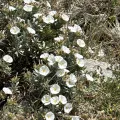
Silverbush
Convolvulus cneorum L.
Description
Silverbush (lat. Convolvulus cneorum L.) is an evergreen subshrub belonging to the Convolvulaceae family. Unlike its vining relatives, this species develops into a compact, rounded mound of foliage, widely admired in horticulture for its distinct silvery appearance and delicate floral display.
Native to the Mediterranean region, the plant is naturally distributed across Southern Europe and coastal areas of the Mediterranean basin. It has evolved to thrive in rocky, calcareous, and nutrient-poor soils. Because of this origin, it is highly adapted to dry environments and intense solar exposure, making it an excellent candidate for xeriscaping.
The botanical characteristics of Convolvulus cneorum include lanceolate, silky leaves densely covered with fine white hairs, which give the plant its characteristic metallic sheen. During the late spring and early summer, the shrub produces funnel-shaped flowers, typically white with a yellow throat, creating a high-contrast visual effect against the foliage.
Cultural requirements emphasize the need for perfect drainage. In garden settings, the Silverbush must be planted in well-draining soil, ideally on slopes or in raised beds, to prevent root rot, which is its primary physiological threat. It requires full sun exposure to maintain its compact growth habit; low light levels lead to etiolation and increased susceptibility to pests.
Common horticultural use involves its deployment in rock gardens, coastal landscaping, and container gardening in colder climates. In terms of protection, the most frequent issues are aphids and fungal diseases related to stagnant humidity. Proper pruning after flowering is essential to maintain the structural integrity of the plant and to prevent it from becoming woody and sparse over time.
Photo gallery