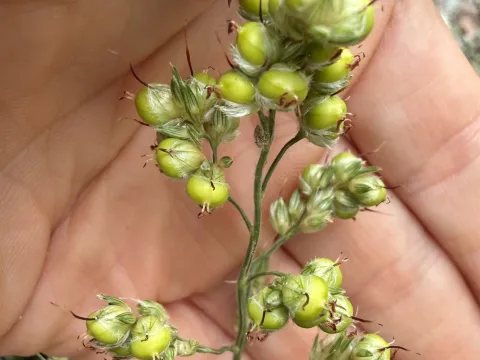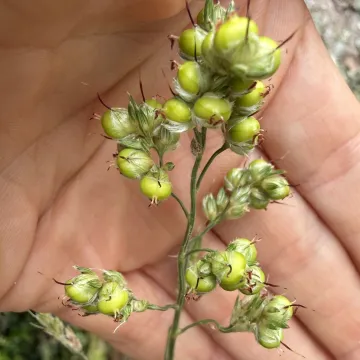
Sorghum caudatum
Sorghum caudatum
Description
Sorghum caudatum is a species of annual grass belonging to the Poaceae family. Recognized as a key variety of grain sorghum, it is highly valued for its exceptional yield potential and its remarkable ability to thrive in harsh environments where other traditional cereal crops fail to produce a viable harvest.
Originating in Africa, this crop has become a staple in many tropical and subtropical regions worldwide. Its cultivation range extends across arid and semi-arid zones, where farmers rely on its inherent hardiness to provide food and feed security. It is particularly well-adapted to regions facing irregular rainfall patterns and high heat stress.
Botanically, this plant is characterized by a robust stalk and dense, often pendulous panicles. The seeds are typically large and nutritionally dense, containing significant amounts of carbohydrates and proteins. The plant exhibits a highly efficient root system that allows it to mine for water deep within the soil profile during drought conditions.
Agronomic requirements center on soil temperature and weed management. It requires warm soil for germination and sufficient light to maximize its photosynthetic potential. While it is naturally resistant to many environmental stressors, early-stage weed control is essential for establishing a healthy, uniform stand of plants that can successfully compete for nutrients.
Economic applications for Sorghum caudatum are broad and significant:
- Human consumption in the form of flour, porridge, and traditional fermented foods.
- High-quality livestock fodder and forage production.
- Industrial use for starch extraction and biofuel feedstock.
- Genetic improvement as a parental line in sorghum breeding programs.
The crop is susceptible to certain fungal pathogens such as smut and various leaf spots, which require careful monitoring. Common pests include aphids and the sorghum midge, which can impact grain quality. Implementing integrated pest management strategies is crucial for maintaining productivity and ensuring the long-term sustainability of the harvest.
Photo gallery