Durra sorghum
Sorghum durra
Description
Durra sorghum (Latin Sorghum durra) is a prominent annual cereal crop belonging to the Poaceae family. It is widely recognized for its exceptional resilience and ability to thrive in semi-arid and tropical environments. This plant is a vital source of nutrition and economic stability in regions where water scarcity limits the production of more sensitive crops like maize or wheat.
The origin of Durra sorghum is traced back to the Ethiopian Highlands, from where it was introduced to various regions across the Middle East, India, and parts of the Mediterranean. Its adaptability allowed it to become a staple crop in many dryland farming systems. Today, it remains an essential component of agricultural biodiversity, particularly in the tropics and subtropics.
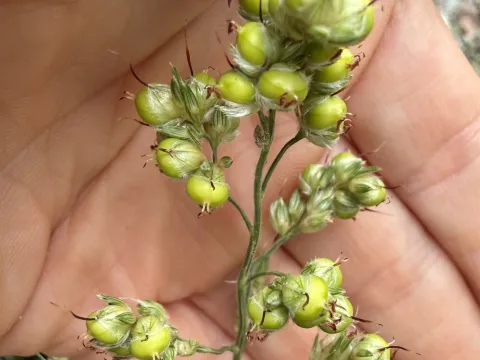
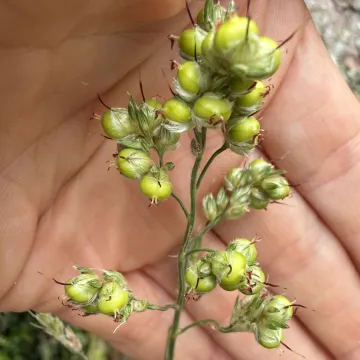
Botanically, the plant features a robust, sturdy stem and dense, compact panicles containing large, rounded seeds. It possesses a highly efficient root system that penetrates deep into the soil profile to access moisture. Additionally, the leaves are often covered with a protective waxy cuticle, which serves as a physiological adaptation to reduce water loss through transpiration under intense solar radiation.
Cultivation requirements primarily focus on high heat sums and prolonged sunlight during the growing season. While Durra sorghum can tolerate a variety of soil types, including those with moderate salinity, it performs optimally on well-drained loams. Efficient agronomic practices, such as precise plant spacing and early-stage weed management, are crucial because the crop has a relatively slow growth rate immediately after germination.
The agricultural and industrial utility of Durra sorghum is significant, encompassing the following areas:
- Human consumption, primarily as a staple grain processed into flour or porridge.
- Livestock feed production, providing high-energy nutrients for cattle, poultry, and pigs.
- Forage production, using both grain and vegetative parts for silage.
- Industrial applications, specifically in the production of ethanol and various grain-based bioproducts.
Crop health is often challenged by pests such as aphids, stem borers, and various mite species. Common diseases, including kernel smut and stalk rot, represent significant management challenges. To ensure a successful harvest, integrated pest management strategies, including the use of certified, disease-resistant seeds and appropriate crop rotation cycles, are essential to maintain yields and grain quality.
Photo gallery