Dense-flowered cordgrass
Spartina densiflora
Description
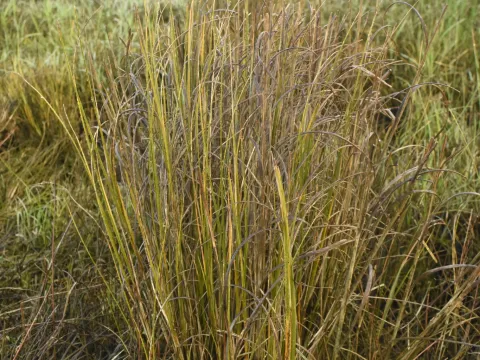
Dense-flowered cordgrass (Spartina densiflora) is a perennial grass species belonging to the Poaceae family. It is a specialized halophyte, naturally adapted to grow in saline coastal wetlands, salt marshes, and estuaries, where it forms dense, monospecific stands that can significantly alter local landscape structures.
Originally native to South America, this species has been introduced to other continents, including parts of North America and Europe. In these new environments, it is often classified as an invasive species due to its competitive nature, which allows it to rapidly colonize tidal marshes and displace native plant communities.
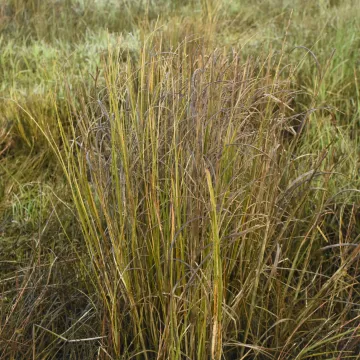
The botanical structure of this plant features stiff, upright culms that can reach heights of up to 1.5 meters. The leaves are typically narrow, pointed, and often tightly rolled, serving as an adaptation to reduce transpiration in saline conditions. A robust, fibrous root system allows the plant to anchor firmly in shifting, waterlogged tidal sediments.
Regarding environmental requirements, the plant thrives in full sun and high salinity levels. It is remarkably tolerant to anaerobic soil conditions and periodic inundation by seawater. While there is no standard agricultural cultivation for this species, it is sometimes monitored in restoration ecology projects to determine its impact on local biodiversity and soil composition.
In terms of economic use, it has been explored for erosion control along coastal shorelines and in phytoremediation efforts to stabilize contaminants in polluted estuarine sediments. However, its management is often focused on suppression or eradication in areas where it threatens to overwhelm native habitats, as its hard, fibrous foliage makes it unsuitable for standard livestock grazing.
- Extreme salt tolerance.
- Aggressive rhizomatous spreading.
- High biomass production in tidal zones.
- Tolerance to waterlogged and anaerobic soil.
Photo gallery