Townsend's cordgrass
Spartina townsendii
Description
Townsend's cordgrass (Latin Spartina townsendii) is a perennial herbaceous plant belonging to the grass family (Poaceae). This species is a natural hybrid known for its exceptional vigor and resilience. It is a highly specialized halophyte that thrives in tidal zones, marshes, and highly saline environments where most agricultural plants would perish.
Originating from the coasts of Southern England in the late 19th century, the plant emerged through the natural hybridization of local and introduced Spartina species. Its distribution area now encompasses various estuaries and salt marshes along the Atlantic coast. Due to its rapid colonization ability, it has become a dominant species in many tidal landscapes, significantly altering sediment accumulation patterns.
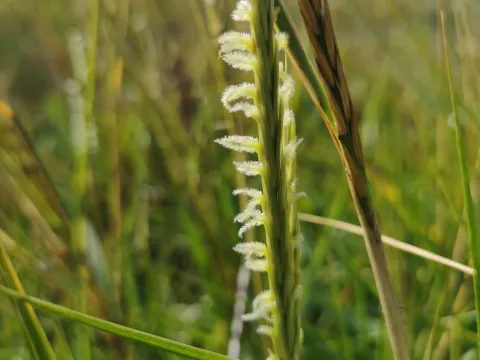
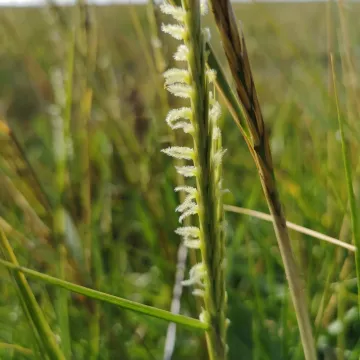
The botanical structure of the plant is characterized by a dense system of creeping rhizomes that provide structural integrity in unstable silt and sand. The stems are robust, reaching heights of up to 1.2 meters, with narrow, tough, and leathery leaves. The flowering spike is typical for the genus, producing a substantial amount of biomass that remains standing throughout the growing season.
Agrotechnical requirements for Spartina townsendii are centered on maintaining high soil moisture and salinity levels. Unlike conventional crops, it thrives in waterlogged conditions and requires minimal management once established. Propagation is primarily vegetative, through rhizome division, which ensures rapid surface coverage and long-term stabilization of the planting site.
The main commercial and ecological applications of Townsend's cordgrass include coastal protection and soil remediation. It is extensively used in civil engineering to prevent erosion along maritime shorelines and to facilitate land reclamation in estuaries. While its use as fodder is limited due to high salt content, it represents a significant source of biomass for experimental energy or fiber production in saline-affected regions.
- Extreme salt tolerance and flood adaptability.
- Extensive rhizome network for superior soil fixation.
- Low maintenance requirements once fully established.
- Rapid biomass production in challenging tidal zones.
Townsend's cordgrass is generally resistant to most pests and plant diseases due to its harsh natural habitat, which limits the survival of many pathogens. Occasional fungal infections may occur in stagnant water during peak summer heat, but these rarely affect the overall health of the colony. The plant's innate vigor allows for quick recovery and resilience against local insects or pathogens.
Photo gallery