


SKU #73578
·
58 views
PROFESSOR VAN DER VILLEN ASTILBE
Astilbe
JSC 'AGROINDUSTRIAL COMPANY 'TAYTSY'User rating
0 votes0% positive reviews
No ratings yet — be the first.
Flowering Period (days)
20-25
Flower Color
White
About product

Thimbleweed Astilbe 'Professor Van Der Vilden' – a perennial herbaceous plant reaching up to 1.2 meters in height and about one meter in width. The leaves are bright green, glossy, palmately divided with serrated edges, giving the bush a decorative appearance even in shade.Flowers of white shade gather into large spike-like inflorescences up to 25 cm long. The flowering period begins in mid-July a…
Flowering Period (days)
20-25
Flower Color
White
Description
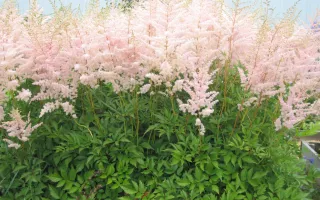
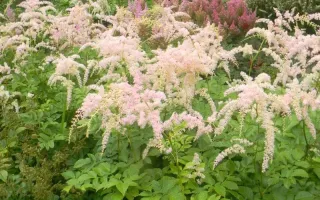
Thimbleweed Astilbe 'Professor Van Der Vilden' – a perennial herbaceous plant reaching up to 1.2 meters in height and about one meter in width. The leaves are bright green, glossy, palmately divided with serrated edges, giving the bush a decorative appearance even in shade.
Flowers of white shade gather into large spike-like inflorescences up to 25 cm long. The flowering period begins in mid-July and continues until early August, lasting about 15–20 days. Flowers are small but dense, creating an impressive look against the green leaves.
The plant prefers moderately moist soil: loose, fertile, well-drained, sandy or loamy. It does not tolerate long-term drought and dry air; during hot periods, it is best to provide partial shade or frequent watering with warm settled water. Astilbe is frost-resistant (zone 3–4), does not require winter covering, but cannot withstand temperatures below -30 °C.
For planting, a depth of about 5 cm and a distance of 25 cm between plants is recommended. The plant is easily propagated by cutting rhizomes, as well as by seeds. Transplanting is done every five years. Astilbe 'Professor Van Der Vilden' is unpretentious in care: it is enough to maintain soil moisture and fertilize with mineral fertilizers as needed.
Ideally suitable for rockeries, mixed borders, borders and group plantings in natural gardens. Combines well with hostas, ferns and Siberian iris, creating harmonious compositions in rustic and NatureGarden styles.
Flowers of white shade gather into large spike-like inflorescences up to 25 cm long. The flowering period begins in mid-July and continues until early August, lasting about 15–20 days. Flowers are small but dense, creating an impressive look against the green leaves.
The plant prefers moderately moist soil: loose, fertile, well-drained, sandy or loamy. It does not tolerate long-term drought and dry air; during hot periods, it is best to provide partial shade or frequent watering with warm settled water. Astilbe is frost-resistant (zone 3–4), does not require winter covering, but cannot withstand temperatures below -30 °C.
For planting, a depth of about 5 cm and a distance of 25 cm between plants is recommended. The plant is easily propagated by cutting rhizomes, as well as by seeds. Transplanting is done every five years. Astilbe 'Professor Van Der Vilden' is unpretentious in care: it is enough to maintain soil moisture and fertilize with mineral fertilizers as needed.
Ideally suitable for rockeries, mixed borders, borders and group plantings in natural gardens. Combines well with hostas, ferns and Siberian iris, creating harmonious compositions in rustic and NatureGarden styles.
Video · 1 video
Suggest a video →Specifications
| Flowering Period (days) | 20-25 |
|---|---|
| Flower Color | |
| Catalog | Catalog → Astilbe |
| Manufacturer | JSC 'AGROINDUSTRIAL COMPANY 'TAYTSY' |
| Originator | JSC 'AGROINDUSTRIAL COMPANY 'TAYTSY' |
| Originator | OAO 'AGROPROMYShLENNOE OBShchESTVO 'TAJTSY' |
| Country | Russia |
Store offers · 3 from 3 stores
Prices are updated on loadLoading offers…
Aggregator catalog: prices are collected automatically from store websites, normalized by AI and converted at the current exchange rate. Before ordering, confirm the price and availability on the store's website. This block is not indexed by search engines — the data is loaded after the page opens.
See also
Often considered together with this variety


Comments · 0