


SKU #1056
·
1 298 views
Ophics F1
Cucumber
SyngentaUser rating
1 vote100% positive reviews
No ratings yet — be the first.
Pollination Type
Pollinated by bees
Growing
Open Ground
Fruit; spines
Large-tubercled
Fruit; flower
Green
About product

A bee-pollinated hybrid for open fields with high field resistance to viral and fungal pathogens.
Pollination Type
Pollinated by bees
Growing
Open Ground
Fruit; spines
Large-tubercled
Fruit; flower
Green
Description
Genetic Potential and Protection
Ofix F1 from Syngenta is a classic bee-pollinated hybrid designed for field cultivation. Its main feature lies in its balanced vegetative development, which provides a powerful leaf canopy capable of effectively supporting fruit development even under stressful weather conditions. In open field cultivation, this plant structure becomes a defining factor in crop longevity.
Phytosanitary Resistance as a Yield Tool
The technological value of Ofix F1 lies in its complex resistance to critical pathogens that traditionally limit cucumber yields in field conditions:
- Viral Diseases: High resistance to Cucumber Mosaic Virus (CMV) eliminates the risk of crop failure during peak aphid activity.
- Fungal Infections: Genetic protection against cladosporiosis and powdery mildew allows for significant optimization of fungicide costs, reducing overall production expenses.
Market Quality and Agronomics
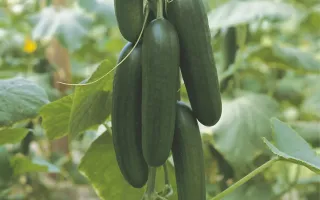
The fruit of this hybrid features a pronounced large-tubercle structure, a standard requirement for both fresh produce markets and the processing industry. The fruit length is 7–9 cm, making it ideal for pickling and marinating. The dark green color remains stable even under intense sunlight.
To reach target yield indicators, it is essential to adhere to a planting density of 30,000–35,000 plants per hectare. With this density, the plant maximizes its vegetative potential, entering the active fruiting phase 45–50 days after emergence. Fruit set intensity under bee pollination depends directly on the quality of early development conditions, which is why Ofix F1 demonstrates the best results on fertile, well-drained soils.
Crop & resistance
Crop
Disease resistance
Specifications hover over for a hint about the specification
|
Pollination Type
Pollination Type
Based on pollination type, all existing cucumber varieties are divided into two groups: insect-pollinated and parthenocarpic (parthenocarpics). Insect-pollinated — cucumber varieties that are pollinated by insects. The plant has both male and female flowers (sterile flowers). Par... |
|
|---|---|
|
Growing
Growing
Eggplant is grown in open fields and under protective cover on small areas. |
|
|
Fruit; spines
Fruit; spines
Important variety characteristic of cucumber. Can be finely ribbed or coarsely ribbed with white and black spines. |
|
|
Fruit; flower
Fruit; flower
At technical maturity, fruit color varies from white, light purple to dark purple. |
|
|
Beginning of fruiting
Beginning of fruiting
The early maturity of watermelon varieties mainly depends on the duration of growth and fruit ripening phases, rather than the timing of female flower blooming. Many varieties, ripening at different times, begin to bloom almost simultaneously. Approximately 30 days after fruit se... |
45 - 50 days |
|
Fruit; length
Fruit; length
Length from 6 to 70 cm. |
7 - 9 cm |
|
Recommended Density
Recommended Density
Optimal productivity is achieved at a planting density of 4000-5500 plants/ha. Possible planting scheme: 300-500x40-80 cm. |
30 -35 thousand pcs/ha |
| Plant Type | |
| Catalog | Catalog → Cucumber |
| Manufacturer | Syngenta |
| Country | Switzerland |
Store offers
Prices are updated on loadLoading offers…
Aggregator catalog: prices are collected automatically from store websites, normalized by AI and converted at the current exchange rate. Before ordering, confirm the price and availability on the store's website. This block is not indexed by search engines — the data is loaded after the page opens.
Alternatives
Cucumber · similar varieties


See also
Often considered together with this variety




Recently viewed
Similar items in this catalog section
Meringue F1
Seminis Vegetable Seeds
From your browsing history
1010.3K 14 offers
27.3 €за 1000 шт ≈ 1 394 ₴

Mirabelle F1
Seminis Vegetable Seeds
From your browsing history
57.2K 13 offers
47.5 €за 1000 шт ≈ 2 425 ₴


Masha F1
Seminis Vegetable Seeds
From your browsing history
55.6K 11 offers
48.8 €за 1000 шт ≈ 2 492 ₴


Comments · 0