
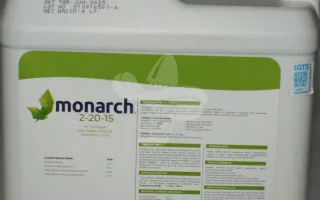


SKU #17163
·
65 views
Atlante
Fertilizers
Atlantic AgricolaUser rating
0 votes0% positive reviews
No ratings yet — be the first.
Fertilizer Type
Mineral
Method of Application
Foliar Fertilizers
Form of the preparation
Aqueous Solution
Maximum Application Frequency
3
About product

A phosphite-based complex for systemic immunity and mineral nutrition of key agricultural crops.
Fertilizer Type
Mineral
Method of Application
Foliar Fertilizers
Form of the preparation
Aqueous Solution
Maximum Application Frequency
3
Description
The technological core of "Atlante": phosphite-based plant protection
"Atlante" by Atlantica Agricola (Spain) is a specialized mineral fertilizer based on phosphites (P2O5 18–30%), which fundamentally differs from traditional phosphate-based fertilizers. Unlike orthophosphates, the phosphite ion (PO3) exhibits high mobility within plant tissues, allowing it to penetrate the leaf surface rapidly and distribute systemically throughout the entire plant organism, moving through both the xylem and phloem.
Why the phosphite form changes the game
The key advantage of this product is its "dual action." On one hand, it is a potent source of phosphorus and potassium, both of which are essential for the development of generative organs and grain filling. On the other hand, the phosphite stimulates the plant to produce phytoalexins—the plant's own proteins and compounds that enhance resistance to pathogens, specifically oomycetes (such as late blight and downy mildew). Therefore, "Atlante" acts as an immunity activator, reducing reliance on chemical fungicides.
Engineering features and application
- Nutrient Balance: In addition to phosphorus, the formulation includes potassium, calcium, copper, and zinc. This combination is critical for crop development: calcium strengthens cell walls, copper supports photosynthesis, and zinc regulates hormonal activity.
- Component Synergy: The high chemical purity of the aqueous solution ensures excellent tank-mix compatibility, allowing for foliar application in conjunction with other pesticides.
- Field Efficiency: The product is formulated for vegetables, potatoes, soybeans, sunflowers, rapeseed, barley, and hops. With a maximum of three applications, it allows for targeted nutrient management during key growth stages, particularly under stress conditions such as drought or extreme temperature fluctuations.
The use of this fertilizer is recommended for situations where more than just simple nutrition is required; it provides effective crop health management. Stable nutrition and physiological activation of the plant through the phosphite form represent a reliable tool against both biotic and abiotic stresses.
Video · 2 videos
Suggest a video →Composition
Nutrient elements
Macronutrients
Phosphorus · Phosphorus · Potassium · Potassium
Application
Specifications hover over for a hint about the specification
|
Fertilizer Type
Fertilizer Type
ORGANIC FERTILIZERS — fertilizers consisting of partially decomposed and undecomposed residues of plant and animal origin (manure (composted), compost, peat, feces, composts, green manure). MINERAL FERTILIZERS — fertilizers containing nutrients in the form of mineral salts. They... |
|
|---|---|
|
Method of Application
Method of Application
Seed treatment — treatment of seeds before sowing. Soil treatment — application of pesticides to soil, for example, in greenhouses. Seed treatment — a preparation used for pre-sowing treatment of seeds of various crops to protect seedlings from plant diseases and pests. In some c... |
|
| Form of the preparation | |
|
Maximum Application Frequency
Maximum Application Frequency
Maximum recommended number of fertilizer applications per vegetation period. |
3 |
| Danger Class | 4 |
| Drug Assignment | |
|
Phosphorus (P2O5)
Phosphorus (P2O5)
Nutrient value of fertilizers expressed as the mass fraction of phosphorus P2O5 (%). |
18-30 |
| Catalog | Catalog → Fertilizers |
| Manufacturer | Atlantic Agricola |
| Country | Spain |
Store offers · 5 from 5 stores
Prices are updated on loadLoading offers…
Aggregator catalog: prices are collected automatically from store websites, normalized by AI and converted at the current exchange rate. Before ordering, confirm the price and availability on the store's website. This block is not indexed by search engines — the data is loaded after the page opens.
Alternatives
Vegetables · similar varieties






See also
Often considered together with this variety


Complex Fertilizers «PLANTONIT»
SCIENTIFIC-PRODUCTION COMPANY "EUROAGROGROUP", T
028 30 offers
0.3 €за 1 кг ≈ 15 ₴



Recently viewed
Similar items in this catalog section
Биоорганическое нано удобрение "НАГРО" / "NAGRO"
LLC NPO "BIOPLAN"
From your browsing history
4311.2K


Vitazim, sol.
F. Plant Design, Inc. USA
From your browsing history
124.9K 8 offers
17.1 €за 1 кг ≈ 873 ₴

Aquarin, l
Private enterprise "Rodonit", Ukraine
From your browsing history
104.9K 2 offers
3.9 €за 1 кг ≈ 199 ₴
Agrofaska, granular phosphorites
Agrosintez, DP
From your browsing history
24.5K 7 offers
0.6 €за 1 кг ≈ 31 ₴


Valagro EDTA/DTP (Ferilen/Secuplant)
АгріСол
From your browsing history
03.6K 5 offers
18.3 €за 1 кг ≈ 934 ₴

ASB GREENWORLD, r.
ASB Grünland Helmut Auranz GmbH
From your browsing history
23.6K 3 offers
5.9 €за 1 кг ≈ 301 ₴
Agriful
AgriTecno Fertilizantes SL, Spain
From your browsing history
03.6K 11 offers
4.8 €за 1 кг ≈ 245 ₴

Comments · 0