
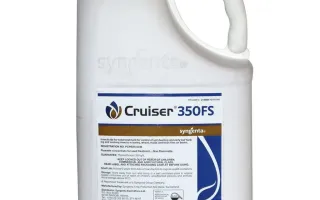


SKU #25391
·
54 views
Promid
Insecticides, Acaricides
RangoliUser rating
0 votes0% positive reviews
No ratings yet — be the first.
Method of Application
Seed Treatment
Form of the preparation
Mobile Suspension Concentrate
Drug Consumption
> 2.0 - 3.0 L/T, > 3.0 - 4.0 L/T
Maximum number of treatments
1
About product

Systemic seed treatment for sunflowers and corn, protecting against a complex of soil pests and early-season insects.
Method of Application
Seed Treatment
Form of the preparation
Mobile Suspension Concentrate
Drug Consumption
> 2.0 - 3.0 L/T, > 3.0 - 4.0 L/T
Maximum number of treatments
1
Description
A Reliable Shield for Seedlings: Systemic Protection by «Rangoli»
The success of sunflower and corn cultivation depends largely on achieving vigorous, healthy emergence. Early-stage soil pests pose the greatest threat, often decimating crops before they even break through the soil surface. The seed treatment agent «Promid» from «Rangoli» is specifically engineered to mitigate this risk.
The product is based on Imidacloprid, a systemic active ingredient. Upon seed treatment, it is absorbed and distributed throughout the seedling, forming a protective barrier. Unlike contact-based insecticides, «Promid» is not washed away by precipitation, offering prolonged protection for both the root system and the developing aerial parts of the plant during its most vulnerable growth stage.
Key Benefits and Characteristics
- Targeted Efficiency: The product is highly effective against wireworms and sand beetles, which are significant threats to corn fields, while also providing control over beet weevils and frit flies.
- Formulation Quality: The flowable suspension concentrate ensures excellent stability in the spray tank, preventing nozzle clogging and ensuring even coating of the seeds, which is vital for precise dosing.
- Systemic Control: Imidacloprid acts by blocking the nervous system of pests, ensuring immediate cessation of feeding upon contact.
Guidelines for Application
To achieve maximum efficacy, it is recommended to apply at a rate of 2.0 to 4.0 L/t, depending on the level of soil infestation and expected pest pressure. «Promid» belongs to Hazard Class 3, requiring standard precautionary measures during handling. It is important to note that only one application is permitted, making the precision and quality of the initial treatment paramount.
This treatment is optimal for commercial farms practicing intensive agriculture that cannot afford crop rotation losses caused by soil pests. «Promid» provides crops with a crucial head start, allowing plants to strengthen during the critical period before full immunity develops.
Composition
Active ingredients
- Imidacloprid инсектицид Неоникотиноиды
Application
Against pests
Specifications hover over for a hint about the specification
|
Method of Application
Method of Application
Seed treatment — treatment of seeds before sowing. Soil treatment — application of pesticides to soil, for example, in greenhouses. Seed treatment — a preparation used for pre-sowing treatment of seeds of various crops to protect seedlings from plant diseases and pests. In some c... |
|
|---|---|
| Form of the preparation | |
|
Drug Consumption
Drug Consumption
Mass of the preparation per unit of treated area. It is customary to express the dosage rate in kilograms per hectare. The dosage rate is most often given in terms of 100% active ingredient, although sometimes it is calculated based on the preparation in the form of application w... |
> 2.0 - 3.0 L/T, > 3.0 - 4.0 L/T |
|
Maximum number of treatments
Maximum number of treatments
Maximum recommended number of treatments per vegetation period. |
1 |
| Danger Class | 2 |
|
Type of Action
Type of Action
Insecticides are divided into contact, systemic, stomach, and fumigants based on their mode of entry into the organism. Contact insecticides affect insects upon contact with any part of their body, penetrating into their organism through the integument. They are used against pest... |
|
| Catalog | Catalog → Insecticides, Acaricides |
| Manufacturer | Rangoli |
| Country | Ukraine |
Store offers · 2 from 2 stores
Prices are updated on loadLoading offers…
Aggregator catalog: prices are collected automatically from store websites, normalized by AI and converted at the current exchange rate. Before ordering, confirm the price and availability on the store's website. This block is not indexed by search engines — the data is loaded after the page opens.
Alternatives
Sunflower · similar varieties


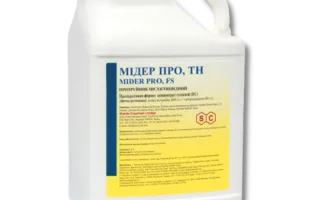


Initer 600 TN
Фадер Альянс Лтд., Великобританія (Fader Alliance Ltd., England) на заводах Нідерландів, Польщі
039 8 offers
18.5 €за 1 л ≈ 945 ₴

Dalia 600 TN
Фадер Альянс Лтд., Великобританія (Fader Alliance Ltd., England) на заводах Нідерландів, Польщі
038 9 offers
22.8 €за 1 л ≈ 1 164 ₴

See also
Often considered together with this variety


Recently viewed
Similar items in this catalog section


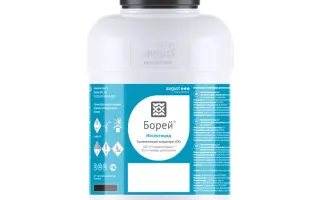
Borey
ЗАТ Фірма Август, Росія.,селище Вурнари,
From your browsing history
27.5K 9 offers
17.6 €за 1 л ≈ 899 ₴


Tabu
ZAT «August-Bel», Republic of Belarus
From your browsing history
45.8K 4 offers
9.8 €за 1 л ≈ 500 ₴



Comments · 0