
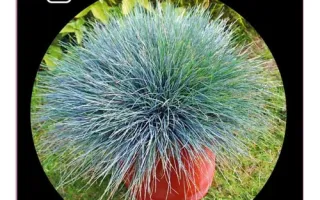
SKU #74099
·
46 views
Dibrova
Kostretz
User rating
0 votes0% positive reviews
No ratings yet — be the first.
Assignment
Feed, Lawn, Pasture
Type
Perennial
About product
Dibrova is a perennial grass widely used in feed and lawn applications due to its high nutritional value and good digestibility for animals.As feed, ryegrass provides up to 60 feed units per 100 kg of hay and contains approximately 5 kg of digestible protein. When grown as pasture, it can yield two to six grazing cycles, and up to two to three mowings with good moisture. Yields reach 50–80 centner…
Assignment
Feed, Lawn, Pasture
Type
Perennial
Description
Dibrova is a perennial grass widely used in feed and lawn applications due to its high nutritional value and good digestibility for animals.
As feed, ryegrass provides up to 60 feed units per 100 kg of hay and contains approximately 5 kg of digestible protein. When grown as pasture, it can yield two to six grazing cycles, and up to two to three mowings with good moisture. Yields reach 50–80 centners per hectare, making it economically attractive for farms.
For sowing, it is recommended to use 20–25 kg/ha in pure form or 10–12 kg/ha in mixtures. Seeds are sown at a depth of 1 to 2.5 cm depending on soil type: 1–1.5 cm on heavy soils and 2–2.5 cm on light soils. Ryegrass grows well on moist fertile loam soils as well as dry meadows, and can also be used as a cover crop to stabilize soil.
This grass is resistant to spring flooding lasting 15–20 days and quickly recovers after grazing and mowing. With nitrogen fertilization exceeding 90 kg/ha, lodging occurs, so moderation should be observed during fertilization. Dibrova is suitable for establishing pastures and hayfields as well as for lawns due to its density and resistance to mechanical stress.
As feed, ryegrass provides up to 60 feed units per 100 kg of hay and contains approximately 5 kg of digestible protein. When grown as pasture, it can yield two to six grazing cycles, and up to two to three mowings with good moisture. Yields reach 50–80 centners per hectare, making it economically attractive for farms.
For sowing, it is recommended to use 20–25 kg/ha in pure form or 10–12 kg/ha in mixtures. Seeds are sown at a depth of 1 to 2.5 cm depending on soil type: 1–1.5 cm on heavy soils and 2–2.5 cm on light soils. Ryegrass grows well on moist fertile loam soils as well as dry meadows, and can also be used as a cover crop to stabilize soil.
This grass is resistant to spring flooding lasting 15–20 days and quickly recovers after grazing and mowing. With nitrogen fertilization exceeding 90 kg/ha, lodging occurs, so moderation should be observed during fertilization. Dibrova is suitable for establishing pastures and hayfields as well as for lawns due to its density and resistance to mechanical stress.
Specifications hover over for a hint about the specification
| Assignment | |
|---|---|
|
Type
Type
Galia (Galia) type — relatively new, of Israeli origin, although there are indications that this variety may originate from Spain. The fruits of this type are round or oval, weighing about 1 kg. The surface is smooth, covered with a delicate, connected netting, turning yellow whe... |
|
| Catalog | Catalog → Kostretz |
| Originator | Feed Research Institute UAAS |
| Country | Ukraine |
Store offers
Prices are updated on loadLoading offers…
Aggregator catalog: prices are collected automatically from store websites, normalized by AI and converted at the current exchange rate. Before ordering, confirm the price and availability on the store's website. This block is not indexed by search engines — the data is loaded after the page opens.
See also
Often considered together with this variety


Recently viewed
Similar items in this catalog section



Comments · 0