


SKU #73181
·
48 views
FORTIS
Miscanthus
RE:FORMA LLCUser rating
0 votes0% positive reviews
No ratings yet — be the first.
Decorative Plants
Miscanthus
Type
Giant Miscanthus
Assignment
Biodiesel
Vegetation Period
160–190 days
About product

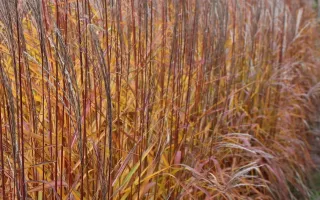
FORTIS is a perennial miscanthus (Miscanthus giganteus) characterized by its tall height and upright bushy structure, reaching between 180 and 270 cm. The plant does not produce seeds; therefore, it is propagated via rhizomes, ensuring the stability of genetic material over many years. The vegetative period is approximately 184 days, and during the first year, a green mass yield of 29–30 t/ha is a…
Decorative Plants
Miscanthus
Type
Giant Miscanthus
Assignment
Biodiesel
Vegetation Period
160–190 days
Description
FORTIS is a perennial miscanthus (Miscanthus giganteus) characterized by its tall height and upright bushy structure, reaching between 180 and 270 cm. The plant does not produce seeds; therefore, it is propagated via rhizomes, ensuring the stability of genetic material over many years. The vegetative period is approximately 184 days, and during the first year, a green mass yield of 29–30 t/ha is achieved, making the crop attractive for industrial use.
The key advantage of FORTIS is its high cellulose content (42–45 %) and a significant straw yield in the third year (19–20 t/ha). These parameters make the plant in demand as raw material for cellulose and paper production, as well as for biofuels. Additionally, miscanthus is resistant to pests and groundwater, is non-invasive, and can absorb carbon dioxide from the atmosphere, increasing its ecological value.
In agriculture, FORTIS is used as buffer strips, for mulching, as bedding for animals, and for soil restoration. Thanks to its disease and pest resistance, as well as high yield, the crop is suitable for a wide range of climatic conditions, providing farmers with a stable income and a clean resource for industrial production.
The key advantage of FORTIS is its high cellulose content (42–45 %) and a significant straw yield in the third year (19–20 t/ha). These parameters make the plant in demand as raw material for cellulose and paper production, as well as for biofuels. Additionally, miscanthus is resistant to pests and groundwater, is non-invasive, and can absorb carbon dioxide from the atmosphere, increasing its ecological value.
In agriculture, FORTIS is used as buffer strips, for mulching, as bedding for animals, and for soil restoration. Thanks to its disease and pest resistance, as well as high yield, the crop is suitable for a wide range of climatic conditions, providing farmers with a stable income and a clean resource for industrial production.
Specifications
| Decorative Plants | |
|---|---|
| Type | |
| Assignment | |
| Vegetation Period | 160–190 days |
| Plant Height | 2–2.5 m |
| Dry Matter Yield | 20–30 t/ha |
| Catalog | Catalog → Miscanthus |
| Manufacturer | RE:FORMA LLC |
| Originator | RE:FORMA LLC |
| Originator | Фгбну Федеральный Исследовательский Центр Картофеля Имени А.Г. Лорха |
| Country | Russia |
Store offers
Prices are updated on loadLoading offers…
Aggregator catalog: prices are collected automatically from store websites, normalized by AI and converted at the current exchange rate. Before ordering, confirm the price and availability on the store's website. This block is not indexed by search engines — the data is loaded after the page opens.
See also
Often considered together with this variety


Recently viewed
Similar items in this catalog section




Comments · 0