

SKU #341
·
390 views
Leaderlux 48
Herbicides, Desiccants
Luxembourg Industries Ltd.User rating
0 votes0% positive reviews
No ratings yet — be the first.
By Mode of Action
Non-selective herbicide
Last Processing Date, Days
1
Form of the preparation
Aqueous Solution
By Application Timing
Post-emergence herbicide
About product
A multicomponent formula for total control of a wide range of broad-leaved weeds in cereals and soybeans.
By Mode of Action
Non-selective herbicide
Last Processing Date, Days
1
Form of the preparation
Aqueous Solution
By Application Timing
Post-emergence herbicide
Description
Synergy of Components: The Chemical «Architect» of the Field
«Liderlux 48» by Luxembourg Industries Ltd. is a complex multicomponent system where the combination of bentazone, dicamba, and 2,4-D creates a cross-suppression effect on weeds. This formula allows for the control of both hard-to-eradicate broad-leaved plants and malicious perennials that often evade the action of single-ingredient products.
How it works: The Technical Aspect
- Triple Mechanism of Action: The combination of active ingredients ensures systemic activity, penetrating the plant’s vascular system via the leaf surface. While 2,4-D and dicamba disrupt cell division and cause phytohormonal imbalances, bentazone blocks photosynthesis, which is critical for fighting «stubborn» species like field thistle or bindweed.
- Wide Application Range: The product effectively treats crops of soybean, winter and spring wheat, barley, and corn. Its use as a post-emergence herbicide makes it a flexible tool in an agronomist’s arsenal, allowing for adjustments based on the actual weed pressure in the field.
- Dual Role: Beyond its herbicidal activity, «Liderlux 48» serves as an effective desiccant. This technical solution allows for crop «drying» before harvest, accelerating maturation and facilitating mechanical harvesting, which is particularly relevant in regions with unstable weather conditions at the end of the season.
Practical Application Guidelines
The working solution is prepared at a dosage of 2.0–3.0 L/ha. Thanks to the liquid formulation (aqueous solution), it mixes easily in tank mixes without forming sediment, provided the concentration is calculated correctly. The pre-harvest interval is only 1 day, confirming a high safety profile when following class 3 hazard regulations. High penetration capacity through the leaf surface ensures results even against such «difficult» targets as ragweed, pigweed, or shepherd’s purse.
Composition
Application
Used on crops
Specifications hover over for a hint about the specification
|
By Mode of Action
By Mode of Action
Herbicides are divided into two groups according to their mode of action: Non-selective herbicides — intended for the destruction of all plant species. They are applied in agricultural fields during the absence of the main crop (after harvest, before crop emergence, on fallow lan... |
|
|---|---|
|
Last Processing Date, Days
Last Processing Date, Days
Number of days from processing to harvest cleanup |
1 |
| Form of the preparation | |
|
By Application Timing
By Application Timing
Herbicides are classified according to application timing into pre-emergent and post-emergent herbicides. Pre-emergent herbicides are mostly soil-applied or granular formulations applied before the emergence of crop plants. They are applied either pre-sowing (during pre-sowing cu... |
|
|
Drug Consumption
Drug Consumption
Mass of the preparation per unit of treated area. It is customary to express the dosage rate in kilograms per hectare. The dosage rate is most often given in terms of 100% active ingredient, although sometimes it is calculated based on the preparation in the form of application w... |
From 2.0 - 3.0 L/ha |
|
By type of action
By type of action
Depending on their ability to move through living tissues, herbicides are divided into contact and systemic. Contact herbicides cause local damage to plant tissue upon contact, which dies or gradually degrades. This action does not always completely destroy the plant; often, its... |
|
|
By application method
By application method
Based on the method of application, herbicides are divided into foliar, soil, and root herbicides. Foliar herbicides are applied to vegetative plants and act through their above-ground organs. The main method of application for such preparations is spraying using sprayers or airp... |
|
|
Desiccant
Desiccant
Desiccants (from Latin desicco — dry; desiccans (desiccantis) — drying) are chemical substances used in agriculture for desiccating plants at the root. They can be conditionally classified as herbicides, as they irreversibly affect plants by causing tissue dehydration, ultimately... |
|
| Danger Class | 3 |
| Catalog | Catalog → Herbicides, Desiccants |
| Manufacturer | Luxembourg Industries Ltd. |
| Country | Israel |
Store offers · 1 from 1 stores
Prices are updated on loadLoading offers…
Aggregator catalog: prices are collected automatically from store websites, normalized by AI and converted at the current exchange rate. Before ordering, confirm the price and availability on the store's website. This block is not indexed by search engines — the data is loaded after the page opens.
Alternatives
Soybean · similar varieties


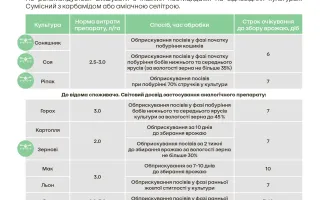


See also
Often considered together with this variety





Recently viewed
Similar items in this catalog section
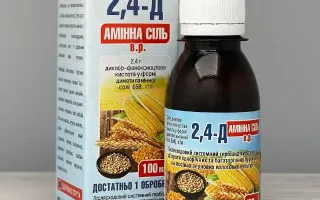

Stomp 330
БАСФ Агро БВ, Швейцарія, на заводі , Франція,Італія (Сієна)
From your browsing history
710.8K 14 offers
13.2 €за 1 л ≈ 674 ₴


Lazurit
ЗАТ Фірма Август, Росія.,селище Вурнари,
From your browsing history
39.1K 11 offers
6.4 €за 1 л ≈ 327 ₴


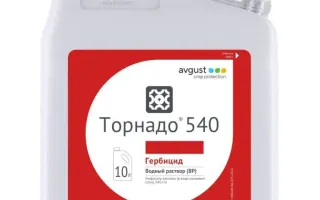
Tornado
ЗАТ Фірма Август, Росія.,селище Вурнари,
From your browsing history
57.8K 8 offers
0.8 €за 1 л ≈ 41 ₴


Comments · 0