Description
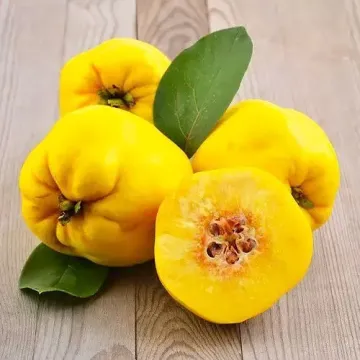
Quince (Cydonia oblonga Mill.) is a deciduous fruit-bearing tree that belongs to the Rosaceae family. It is the sole member of the genus Cydonia and is highly valued for its large, golden-yellow, pear-shaped fruits, which are packed with pectin and aromatic compounds, making them ideal for processing into jams, jellies, and preserves.
The origin of this crop traces back to the Caucasus, Central Asia, and Iran. Today, it is cultivated worldwide in temperate and Mediterranean climates. The plant is adaptable but thrives best in warm regions with long growing seasons, although modern breeding programs have introduced varieties that exhibit significant winter hardiness for cultivation in cooler zones.
Botanically, the quince tree is characterized by its crooked, spreading branches and simple, alternate leaves. One of its most distinctive features is the late flowering period, which protects the blossoms from late spring frosts. The fruits are pomes, initially covered with fine, greyish hairs that slough off as the fruit matures to a smooth, yellow skin.
Effective quince cultivation requires deep, fertile, and well-drained soils. While the tree shows moderate drought tolerance once established, consistent soil moisture is critical during the fruit development phase to ensure high yield and quality. Pruning is essential for maintaining an open crown structure, which improves airflow and sunlight penetration to prevent fungal issues.
Quince is prone to several specific issues that managers must monitor throughout the growing season:
- Monilinia fruit rot and blight
- Fire blight (Erwinia amylovora)
- Codling moth infestation
- Powdery mildew
- Aphids and scale insects
Контент-граф
Connections · Quince
Most often together:
Marketplace
Products · 26