Inkberry
Ilex glabra (L.) A. Gray
Description
Inkberry (Ilex glabra) is an evergreen shrub belonging to the Holly family (Aquifoliaceae). Often referred to as Appalachian tea, this species is highly valued for its dense, dark green foliage and its ability to thrive in environments where other shrubs might struggle. It is a slow-growing, multi-stemmed plant that has become a staple in various agricultural and horticultural applications.
The plant is native to the coastal regions and inland plains of eastern North America. Its historical range extends from Canada down to Florida and west to Louisiana. In its natural habitat, it is commonly found in moist, acidic, and sandy soils, often thriving in pine barrens and areas bordering swamps or marshes, which defines its specific ecological requirements in cultivation.
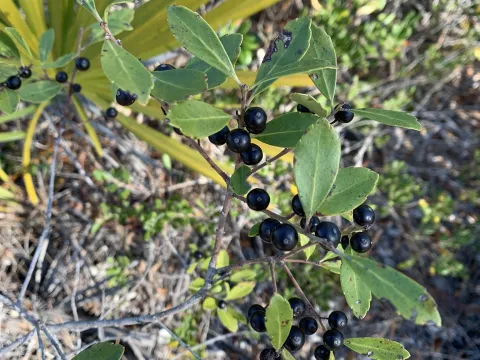
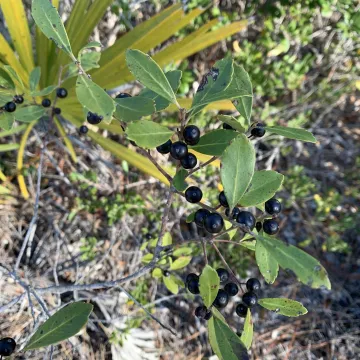
Botanically, Inkberry is characterized by its smooth, lanceolate, leathery leaves that lack the sharp spines typical of other hollies. The plant reaches a height of 5 to 8 feet and produces small, non-showy white flowers in the spring. By autumn, these are replaced by small, shiny black drupes, which provide a vital food source for local bird populations and add ornamental interest to the landscape.
Successful cultivation requires specific soil conditions, primarily a pH level between 4.5 and 6.5. It is essential to ensure well-draining soil, as the plant is intolerant to heavy waterlogging despite its preference for moist environments. Gardeners should plant it in areas that provide protection from drying winter winds. Maintenance includes selective pruning to prevent the shrub from becoming too "leggy" or sparse at the base as it matures.
Common issues include root rot caused by poor drainage and fungal leaf spots in high-humidity areas. Pest problems are relatively manageable, though scale insects and spider mites occasionally require intervention. Integrated pest management, including regular inspection and maintaining plant vigor through proper fertilization, is the most effective approach to ensuring the longevity of Inkberry plantations.
- Thrives in acidic, moist soil.
- Excellent for naturalistic hedges.
- Hardy in USDA zones 5 through 9.
- Provides food and shelter for wildlife.
Photo gallery