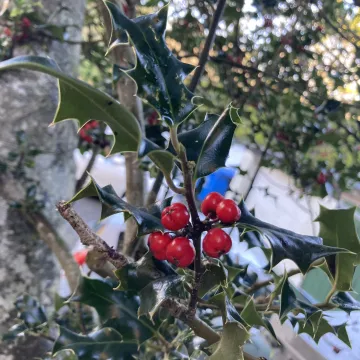

Common holly
Ilex aquifolium L.
Description
Common holly (lat. Ilex aquifolium L.) is an evergreen woody species belonging to the family Aquifoliaceae. It is a slow-growing plant extensively cultivated for its ornamental value, characterized by its iconic spiny leaves and vibrant red drupes that persist throughout the winter season.
The species is native to Western and Southern Europe, parts of Northern Africa, and Southwestern Asia. In agricultural and horticultural contexts, it thrives in temperate climates with high atmospheric humidity. It is typically sensitive to extreme drought and severe continental frost, requiring sheltered locations for optimal growth and biomass development.
Botanically, Ilex aquifolium is a dioecious plant, meaning that individual plants produce either staminate (male) or pistillate (female) flowers. This biological trait dictates the planting scheme in nurseries: to ensure fruit production, which is a key commercial commodity, both sexes must be present in proximity to facilitate effective cross-pollination.
The agronomic requirements for holly include well-drained, nutrient-rich soils with a slightly acidic to neutral pH. High organic matter content significantly improves the health of the root system. Proper site preparation, including soil drainage and periodic mulching to retain moisture, is essential for maintaining plant vigor in commercial settings.
In terms of хозяйственное usage, the holly is primarily cultivated for the decorative plant trade, specifically for seasonal floral arrangements and topiary garden forms. Growers must monitor for common pests such as holly leaf miner and various scale insects, while maintaining adequate air circulation to prevent fungal pathogens like leaf spot diseases.
Photo gallery