Highclere holly
Ilex x altaclerensis (Loudon) Dallim.
Description
Highclere holly (Latin Ilex x altaclerensis) is a hybrid evergreen shrub or tree belonging to the Aquifoliaceae family. It is a result of cross-breeding between Ilex aquifolium and Ilex perado. Within the scope of ornamental agriculture, it is highly valued for its vigorous growth, glossy evergreen foliage, and its ability to withstand varied environmental conditions, making it a robust choice for public and private landscapes.
The origin of this hybrid dates back to Highclere Castle in England, where it was first identified and cultivated. Because it is a hybrid, it does not exist as a native species but is propagated widely by nurseries across Europe and North America. Its primary cultivation range includes temperate climates where it can thrive without the risk of extreme, prolonged frost, which might damage the younger, more succulent shoots.
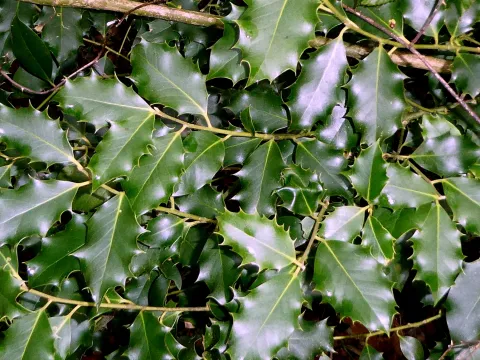
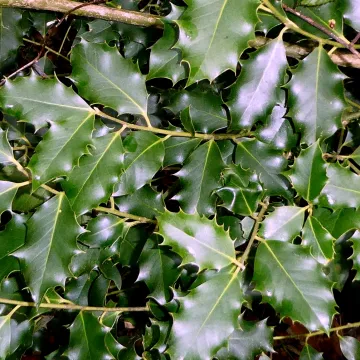
Botanically, Highclere holly is characterized by its large, leathery, and often shiny leaves. Depending on the specific cultivar, the foliage may exhibit variegation or shades of deep emerald green. The plant is dioecious, meaning it produces male and female flowers on separate individuals. Fertilized female flowers yield showy, red or orange berries that add significant ornamental value during the autumn and winter seasons, attracting local wildlife.
Agronomic requirements for this crop focus on well-drained, slightly acidic to neutral soils. While it can tolerate full sun, it performs exceptionally well in partial shade. Irrigation is crucial during the plant's establishment phase, particularly in dry periods. Pruning is an essential cultural practice, typically performed in late winter, to maintain plant health, shape the canopy, and ensure adequate airflow to prevent internal foliage dieback.
The primary use of Highclere holly is in landscape design, where it is frequently used for dense hedging, privacy screens, and specimen planting. Regarding health, the plant is susceptible to pests such as scale insects, mites, and leaf miners. Diseases like leaf spot and root rot can occur if soil drainage is inadequate. Regular monitoring and integrated pest management strategies are sufficient to keep the plants healthy and vigorous throughout their lifecycle.
- Vigorous growth habit and high adaptability.
- Stunning foliage variations among cultivars.
- Excellent suitability for formal hedging.
- Requirement for consistent, well-draining soil.
- Maintenance pruning is vital for dense growth.
Photo gallery