Yerba mate
Ilex paraguariensis A. St.-Hil.
Description
Yerba mate (Ilex paraguariensis) is a perennial evergreen tree belonging to the Aquifoliaceae family. While it can grow up to 15 meters in the wild, it is typically managed as a shrub on commercial plantations, pruned to a height of 2 to 5 meters to facilitate efficient harvesting of its nutrient-rich leaves.
The native habitat of this plant includes the subtropical regions of South America, specifically Paraguay, Argentina, Uruguay, and Southern Brazil. It originally evolved as an understory tree in humid forests, relying on the canopy for protection against direct sunlight during its early stages of development.
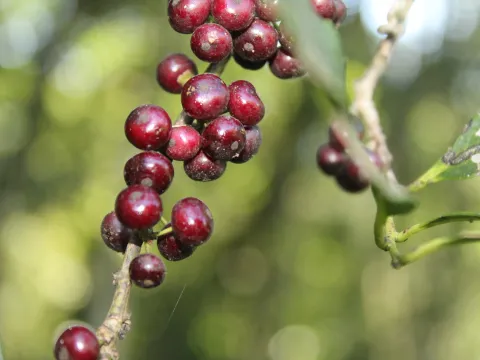
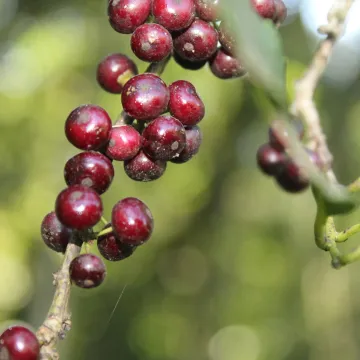
Botanically, the species is characterized by smooth bark and thick, leathery leaves with serrated margins. The plant is dioecious, meaning it has separate male and female individuals, producing small white flowers that transition into tiny, dark-red drupes upon maturation. The foliage contains significant amounts of caffeine and polyphenols.
For successful cultivation, producers must ensure the soil is deep, fertile, and slightly acidic, with excellent drainage to prevent root rot. The climate must be humid with consistent rainfall, as the plant is highly sensitive to drought stress. Agro-management typically involves soil enrichment with organic matter and strategic pruning to maximize leaf production.
The primary economic use of this plant is the production of yerba mate, a traditional infusion popular for its stimulant properties. Industrial challenges include the management of pests such as scale insects and leaf miners, as well as the prevention of fungal diseases which are prevalent in high-humidity cultivation environments.
Photo gallery