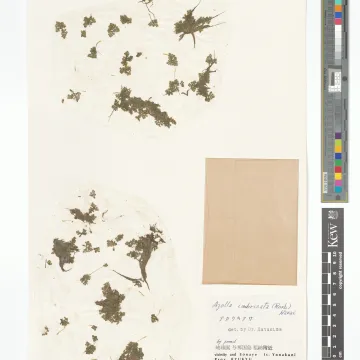

Azolla imbricata
Azolla imbricata
Description
Azolla imbricata is a species of free-floating aquatic fern belonging to the Salviniaceae family. It is recognized globally for its unique symbiotic relationship with the cyanobacterium Anabaena azollae, which resides in the cavities of its fronds and enables the plant to fix atmospheric nitrogen.
Originating from tropical and subtropical regions, this plant has a wide natural distribution across Asian waterways. Today, it is intentionally cultivated in various parts of the world, particularly in rice-growing regions, due to its exceptional ability to improve soil fertility and act as a natural, sustainable biofertilizer.
The botanical structure of Azolla imbricata is characterized by small, overlapping fronds arranged in a tiled pattern, which allows for rapid surface coverage. The plant lacks a robust root system, relying on the absorption of nutrients directly from the water column, which makes it highly sensitive to the water's chemical composition.
For successful cultivation, the species requires shallow, still, or slow-moving water with temperatures ideally between 20°C and 30°C. High sunlight intensity promotes rapid multiplication. Proper management involves controlling water pH and ensuring sufficient phosphorus availability, which is the primary nutrient limiting growth in many natural water bodies.
The agricultural importance of Azolla imbricata spans multiple sectors. It is extensively used in rice cultivation to boost yields through nitrogen enrichment. Furthermore, it serves as a nutrient-dense fodder for livestock, including ducks, chickens, and pigs, providing an affordable source of protein and essential micronutrients.
- Significant nitrogen-fixing potential.
- High protein content for animal nutrition.
- Sustainable water purification capabilities.
- Low-cost, renewable biofertilizer source.
Photo gallery