Yew plum pine
Podocarpus macrophyllus (Thunb.) D. Don
Description
Yew plum pine (Podocarpus macrophyllus) is a long-lived, evergreen conifer species belonging to the Podocarpaceae family. Known for its lush, dark-green foliage and structural versatility, it is widely utilized in ornamental horticulture and serves as a premier subject for bonsai art due to its ability to tolerate heavy pruning and shaping.
The species is native to southern Japan, China, and Taiwan. It thrives in warm, humid, subtropical climates. While it can reach significant heights in the wild, cultivation methods—particularly in containers—effectively manage its growth, making it a popular choice for both interior landscaping and outdoor gardens in frost-free regions.
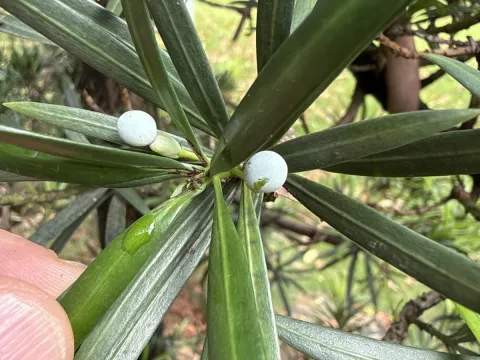
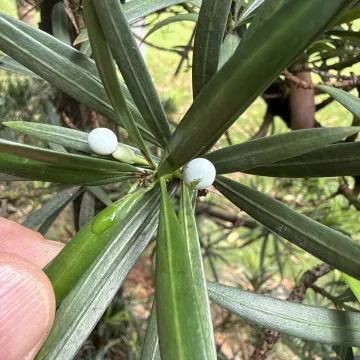
Botanically, the plant is characterized by linear leaves that are much broader than typical needles, spirally arranged along the stems. A distinct feature of this genus is the production of seeds encased in a fleshy, berry-like structure called an aril, which can be brightly colored. This biological trait makes it unique among conifers, providing both aesthetic interest and ecological value by attracting wildlife.
Successful cultivation requires a well-drained, slightly acidic to neutral substrate. The plant is adaptable to various light conditions, ranging from full sun to partial shade, though bright indirect light is optimal. Regarding irrigation, the soil should be kept consistently moist but never waterlogged. Fertilization during the active growing season promotes dense foliage and healthy development of the root system.
Economic and practical applications include:
- Creation of formal hedges and sculptural topiary designs.
- Highly prized wood for specialized cabinetry and fine woodworking in its native range.
- Global nursery trade for high-value ornamental specimens.
- Interior design applications, as it handles indoor conditions better than many other conifers.
Common pests include scale insects, mealybugs, and spider mites, particularly when the plant is kept in dry indoor environments. Root rot caused by poor soil drainage remains the primary disease threat. Proactive horticultural management, including proper sanitation and the use of integrated pest management (IPM) practices, ensures the longevity and vitality of these evergreen trees.
Photo gallery