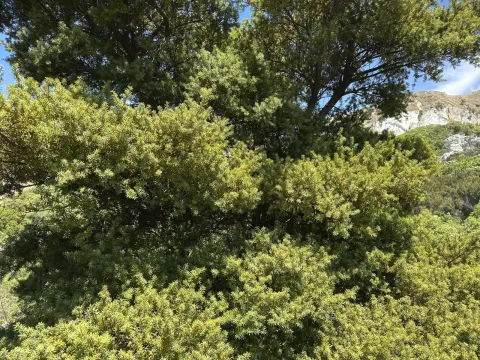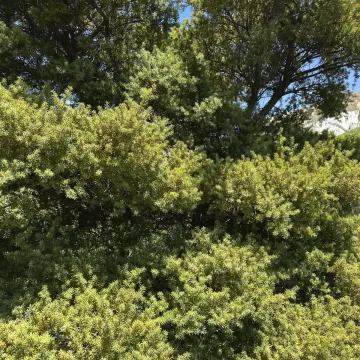
Podocarpus totara
Podocarpus totara G. Benn. ex D. Don
Description
Podocarpus totara, commonly known as the totara, is a large evergreen conifer belonging to the Podocarpaceae family. It is endemic to New Zealand and is considered one of the most iconic forest trees in the region. The tree is characterized by its thick, fibrous bark and needle-like leaves, and in its native habitat, it can reach impressive heights of up to 30 meters, living for several centuries.
Originating from the diverse forests of New Zealand, the species thrives in regions with stable, mild temperatures and high atmospheric humidity. While it is naturally found in various soil types, from alluvial flats to rocky ridges, it prefers well-drained, nutrient-rich, and slightly acidic soils for optimal growth. It is not cold-hardy in severe climates, making it suitable mainly for subtropical or temperate maritime zones.
Botanically, the species is dioecious, meaning male and female cones are produced on separate trees. The female reproductive structures develop a fleshy, edible aril that turns bright red when mature, which is essential for the tree's propagation via native birds. Its growth rate is relatively slow, but the wood structure is incredibly dense and stable, providing the tree with excellent resilience against structural damage.
Regarding its utility, the totara has profound cultural and historical significance, particularly to the Māori people, who used its durable timber for crafting canoes (waka), carvings, and houses. In modern forestry and horticulture, the species is valued for its rot-resistant wood and its role in reforestation projects. It is also an excellent choice for large-scale landscaping where a long-lived, majestic specimen is required.
The tree is generally robust, but it can be susceptible to specific pests and pathogens if the environment is not managed correctly. Common issues include:
- Root rot caused by poor soil drainage;
- Infestations by scale insects or aphids;
- Fungal infections on foliage during periods of stagnant air;
- Frost damage if planted in exposed, low-lying areas.
Photo gallery