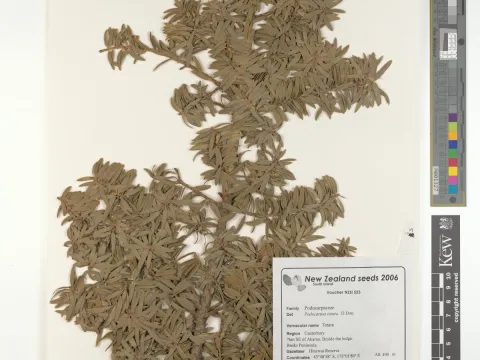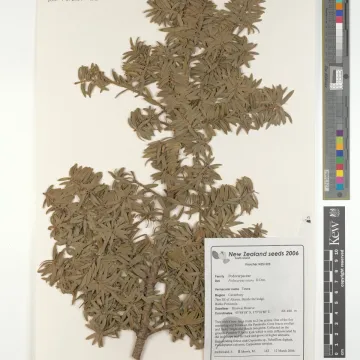

Hall's totara
Podocarpus cunninghamii Colenso
Description
Hall's totara (Latin: Podocarpus cunninghamii) is a distinctive coniferous species belonging to the Podocarpaceae family. Often referred to in its native range as mountain totara, this evergreen tree is renowned for its resilience and ability to thrive in demanding, high-altitude ecological niches.
Originating from New Zealand, the species is naturally distributed across the North and South Islands, specifically in subalpine forests and montane regions. It has evolved to withstand low temperatures, strong winds, and high precipitation, distinguishing it from related species that prefer lowland habitats.
Botanically, Podocarpus cunninghamii is characterized by its slow growth rate, tough, leathery needle-like leaves, and a dense, structural habit. The wood is exceptionally durable and rot-resistant, although its primary modern value lies in its decorative foliage and its suitability for hardy landscape architecture.
Horticultural success with this species depends on providing well-drained, acidic, and organic-rich soils. While it is hardy, the plant requires consistent moisture during its establishment phase. It is essential to ensure adequate air circulation to prevent the accumulation of moisture within the foliage, which can lead to fungal issues.
In terms of management, the species is relatively low-maintenance once established. Typical pests include scale insects and spider mites, which can be managed through regular inspection and integrated pest management practices. By maintaining a clean cultivation environment and avoiding extreme site conditions, growers can ensure the longevity and vitality of this unique conifer.
Photo gallery