Needle-leaved totara
Podocarpus acutifolius Kirk 1883
Description
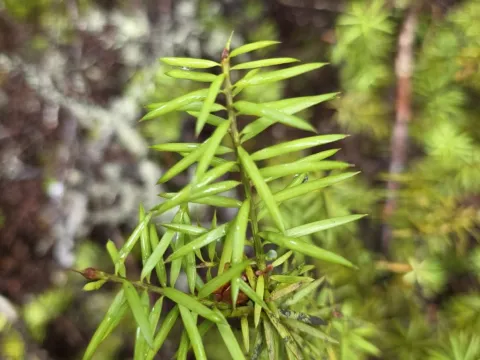
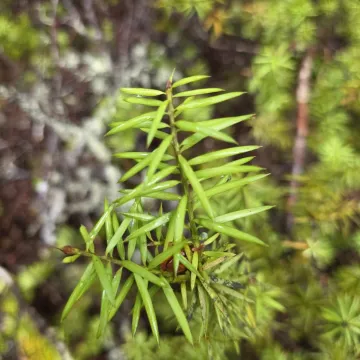
The Needle-leaved totara (Podocarpus acutifolius) is an evergreen coniferous species belonging to the Podocarpaceae family. Native to the South Island of New Zealand, this plant is well-regarded for its distinctive, sharp-pointed foliage, which sets it apart from the more common broad-leaved members of the genus.
In its natural habitat, this species is typically found in lowland forests and along riverbanks, often in riparian environments. The climate in these regions is characterized by moderate temperatures and consistently high humidity, which dictates the physiological requirements for this plant when cultivated in managed landscapes.
Botanically, Podocarpus acutifolius grows as a slow-moving shrub or small tree. It is distinguished by its narrow, linear leaves that exhibit a stiff, needle-like texture. Like other podocarps, it produces characteristic fleshy, modified seed scales, which are nutritionally valuable for avian species, thereby aiding in natural dispersal within its native ecosystem.
Cultivation requirements for the Needle-leaved totara focus on well-drained, fertile soil with a slightly acidic to neutral pH. It thrives best in partial shade, as excessive direct sunlight can scorch the foliage in drier climates. Proper irrigation management is critical: the root system requires consistent moisture but is highly susceptible to root rot if the soil remains waterlogged for extended periods.
- Plant in well-drained, nutrient-rich soil.
- Provide protection from harsh, drying winds.
- Ensure adequate spacing for air circulation to prevent fungal issues.
- Monitor regularly for pests like scale insects or mites.
In landscape architecture, the Needle-leaved totara is valued for its compact growth habit and year-round green foliage. It is commonly used as a feature plant in cool-temperate gardens or as a specimen shrub in mixed border plantings. While relatively hardy, growers should remain vigilant against common conifer pathogens and ensure proper site selection to maximize the plant's health and longevity.
Photo gallery