Boehmeria grandis
Boehmeria grandis
Description
Boehmeria grandis is a perennial herbaceous or shrubby plant belonging to the Urticaceae family. Although it is a close relative of the well-known ramie (Boehmeria nivea), this species possesses unique morphological traits adapted to specific tropical and subtropical ecosystems, distinguishing it within the genus.
The plant's origin is closely linked to the Pacific Islands, particularly the Hawaiian Archipelago, where it is considered an endemic species. In its natural habitat, it thrives in moist forests and on mountain slopes. Unlike some other members of the genus, Boehmeria grandis prefers sites protected from direct, intense sunlight, favoring environments with high humidity.
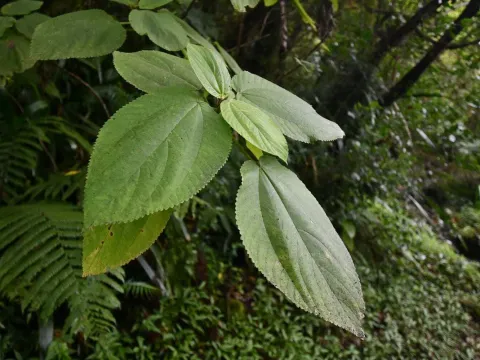
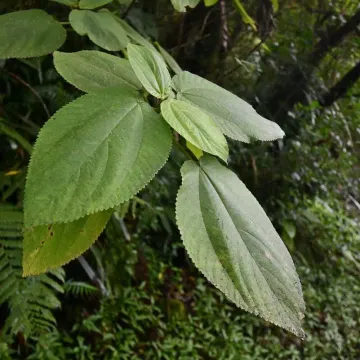
Botanically, the plant is characterized by large, alternate, serrated leaves and stems that become woody at the base. Its flowers are arranged in small spike-like inflorescences. From an agronomic perspective, the crop is valued for its strong bast fibers, which can potentially be utilized in the textile industry, similar to other fiber-yielding crops in the nettle family.
Successful cultivation of Boehmeria grandis requires organic-rich, well-drained soils with a neutral to slightly acidic pH. Climatic conditions must provide a stable temperature range without sudden frost, as the plant is highly sensitive to low temperatures, which can cause severe damage or death to the aerial parts of the plant.
- Ensuring regular irrigation during dry spells.
- Applying nitrogen-based fertilizers to stimulate biomass production.
- Managing common leaf-eating pests and fungal leaf spots.
- Harvesting stems at the stage of technical maturity for optimal fiber quality.
The primary agricultural use of the plant involves the extraction of natural plant fiber, which is known for its high hygroscopicity and resistance to decay. Furthermore, due to its rapid growth rate, Boehmeria grandis can be considered a viable source of biomass for local industrial needs and serves as a significant component in landscape restoration in regions with suitable climatic conditions.
Photo gallery